
Leucism
18.11.2024
Leucism
|
For Prelims: About Leucism, Albinism vs. Leucism |
Why in the news?
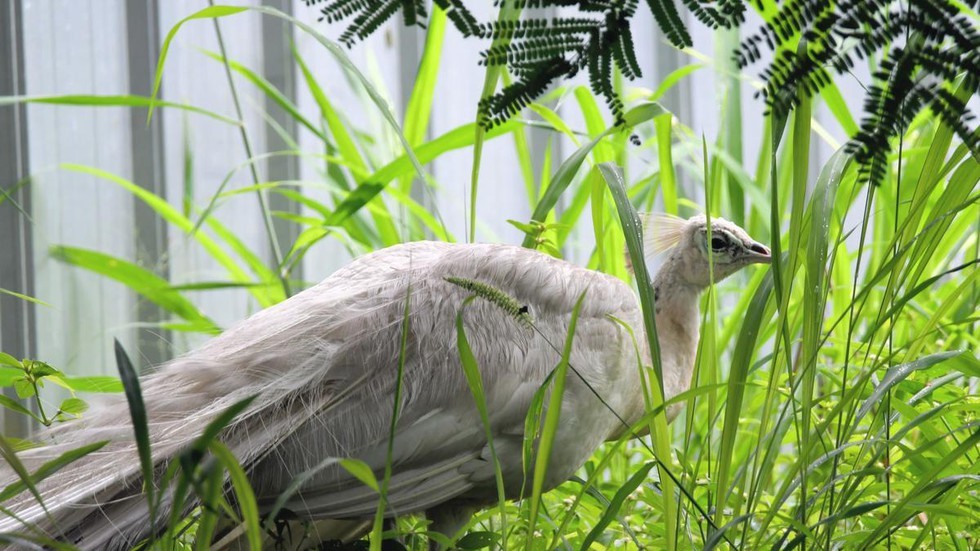
Tamil Nadu Forest Department staff and members of a non-governmental organization recently rescued a rare peacock with white feathers, caused by a genetic condition called leucism.
About Leucism:
- It is an abnormal condition of reduced pigmentation affecting various animals (such as birds, mammals, and reptiles) that is marked by overall pale color or patches of reduced coloring.
- It is caused by a genetic mutation which inhibits melanin and other pigments from being deposited in feathers, hair, or skin.
- In birds, leucism affects only the bird’s feathers, this means they do not have the normal, classic plumage colors.
○They may have white patches where the bird should not have any, or their overall plumage may look pale or bleached out.
Albinism vs. Leucism:
- Albinism is a rare genetic mutation with a complete absence of (or very little) melanin production.
○Melanin is a natural pigment in the skin, hair, eyes, and even brain tissue.
○The type and amount of melanin in animals determine the colour of the skin, hair, and eyes.
- With the lack of melanin production, albinos have white or pinkish coloured skin and red eyes due to the underlying blood vessels showing through from behind the eyes.
- With leucism, there is only a partial loss of melanin production and/or distribution.
○The animal can have white or patchy coloured skin, hair, and/or feathers. The pigment cells in the eyes, legs, and bills of birds, however, are not affected.
Source: The Hindu
In birds, leucism results in:
A) Complete absence of feathers
B) Pale plumage with possible white patches
C) Brightly colored plumage
D) Iridescent feathers
Answer B