
Pigeon pea
23.02.2024
Pigeon pea , Daily Current Affairs , RACE IAS : Best IAS Coaching in Lucknow
|
For the Prelims:About Pigeon pea, Climatic conditions, New protocols of ICRISAT |
Why in the news?
According to the International Crops Research Institute for the Semi-Arid Tropics (ICRISAT) a new fast-breeding protocol is likely to make it easier for scientists to develop better quality varieties of the pigeon pea crop at a faster rate.
About Pigeon pea:
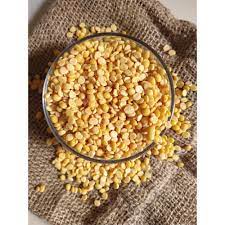
- It is also called arhar and tur in India.
- It is an important legume crop and protein-rich food which is primarily consumed as dal in India.
- It is predominantly a crop of tropical areas mainly cultivated in semi-arid regions of India.
Climatic conditions
○Rain: It requires 600-650 mm of annual rainfall along with moist conditions for the initial eight weeks and dry conditions during its flowering and pod development phase.
○Temperature: It can be grown with a temperature ranging from 260C to 300C in the rainy season and 170C to 220C in the post-rainy (November to March) season.
○Soil: It can be grown on all types of soil; however, sandy loam or loam soil is most suitable for its cultivation.
○It is very sensitive to low radiation at pod development, therefore flowering during the monsoon and cloudy weather, leads to poor pod formation.
- It is commonly intercropped with a wide range of crops. In India, it was estimated that 80 - 90 % of the pigeon pea were intercropped.
- The important diseases of Pigeon pea are Wilt, Sterility mosaic disease, Phytophthora blight, Alternaria blight and Powdery mildew etc.
- Concern: The Pigeon pea’s long growth cycle and sensitivity to day length have hindered breeding efforts, with only about 250 varieties released globally over six decades.
- Health benefits: It has a low glycaemic index and is rich in thiamine, riboflavin, niacin, vitamin B-6, folate, vitamin A, calcium, zinc, iron, magnesium and phosphorus.
- Major Pigeon pea-producing states: Uttar Pradesh, Madhya Pradesh, West Bengal, Bihar and Jharkhand.
New protocols of ICRISAT
- The new convention promises to substantially cut the time required to develop new Pigeon pea lines with desirable traits, effectively bringing food to dryland communities faster.
- The new protocol shortens the breeding and control over factors like photoperiod, temperature, humidity, and breeding cycle to 2 to 4 years while the traditional Pigeon pea breeding takes up to 13 years.
Source: Down to earth