
Artificial Intelligence (AI) and Royalties
11.12.2025
Artificial Intelligence (AI) and Royalties
Context
As Generative AI models continue to expand, a significant debate has emerged regarding intellectual property. The core conflict lies between AI developers who use vast amounts of online data to train their models and content creators who receive no compensation for the use of their work.
The Issue
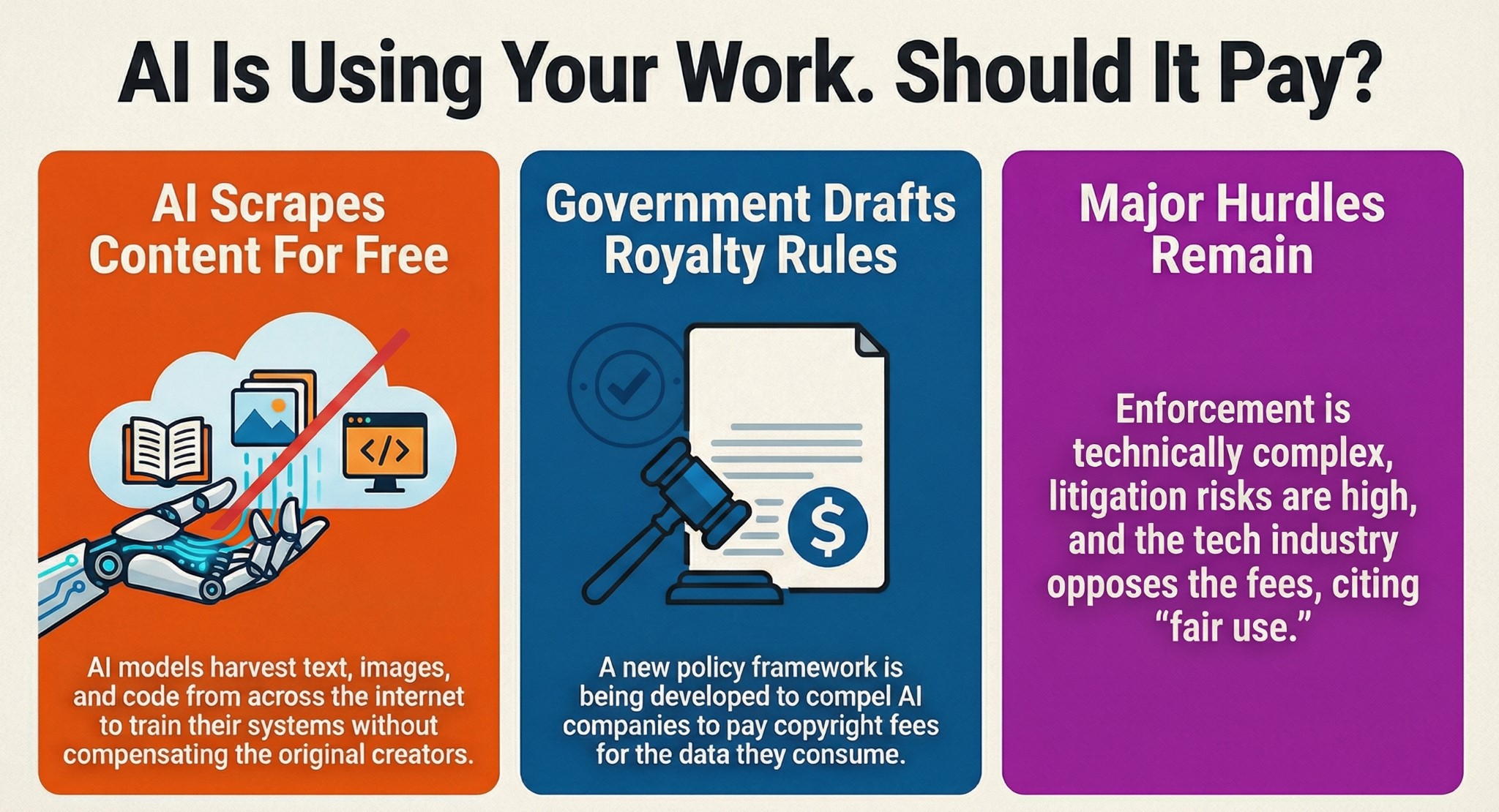
- Data Scraping: AI models (such as LLMs powering chatbots) systematically "scrape" or harvest text, images, and code from the internet to train their algorithms.
- Lack of Compensation: Currently, the creators of this original content—authors, artists, and publishers—are not compensated when their data is used to generate AI responses or create new content.
Government Proposal
- Regulatory Framework: The government is currently drafting a policy framework intended to compel AI companies to pay royalties or copyright fees for the data they consume.
- Objective: To ensure fair remuneration for content creators whose digital assets fuel the intelligence of these systems.
Challenges
- Enforcement Complexity: It is technically difficult to attribute specific AI outputs to specific pieces of training data, making the calculation of fair royalties extremely complex.
- Litigation Risks: Implementing such a framework could trigger a deluge of lawsuits as stakeholders dispute ownership, usage, and valuation.
- Industry Stance: The technology sector largely opposes these measures, often citing "fair use" doctrines and arguing that such fees could stifle innovation and development.
Way Forward
- Hybrid Licensing Models: Establish a tiered system where data use for academic research remains open, but commercial applications require negotiated licenses or subscription-based access to data repositories.
- Technological Attribution: Invest in technologies like watermarking and metadata standards (e.g., C2PA) that allow AI systems to automatically recognize and credit original sources, facilitating accurate royalty distribution.
- Global Harmonization: India should collaborate with international bodies like the G20 and WIPO to create standardized global norms, ensuring that AI regulation does not drive tech investment to jurisdictions with looser copyright laws.
Conclusion
Balancing the explosive growth of AI with the economic rights of human creators is critical for the future of the digital economy. While enforcing royalties presents technical hurdles, a fair compensation model is essential to ensure that the human creativity feeding these algorithms continues to thrive.