
Barcelona Convention
08.12.2025
Barcelona Convention
Context
At COP24 of the Barcelona Convention in Cairo, EU countries and Mediterranean partners adopted strengthened commitments to protect the Mediterranean Sea.
About Barcelona Convention
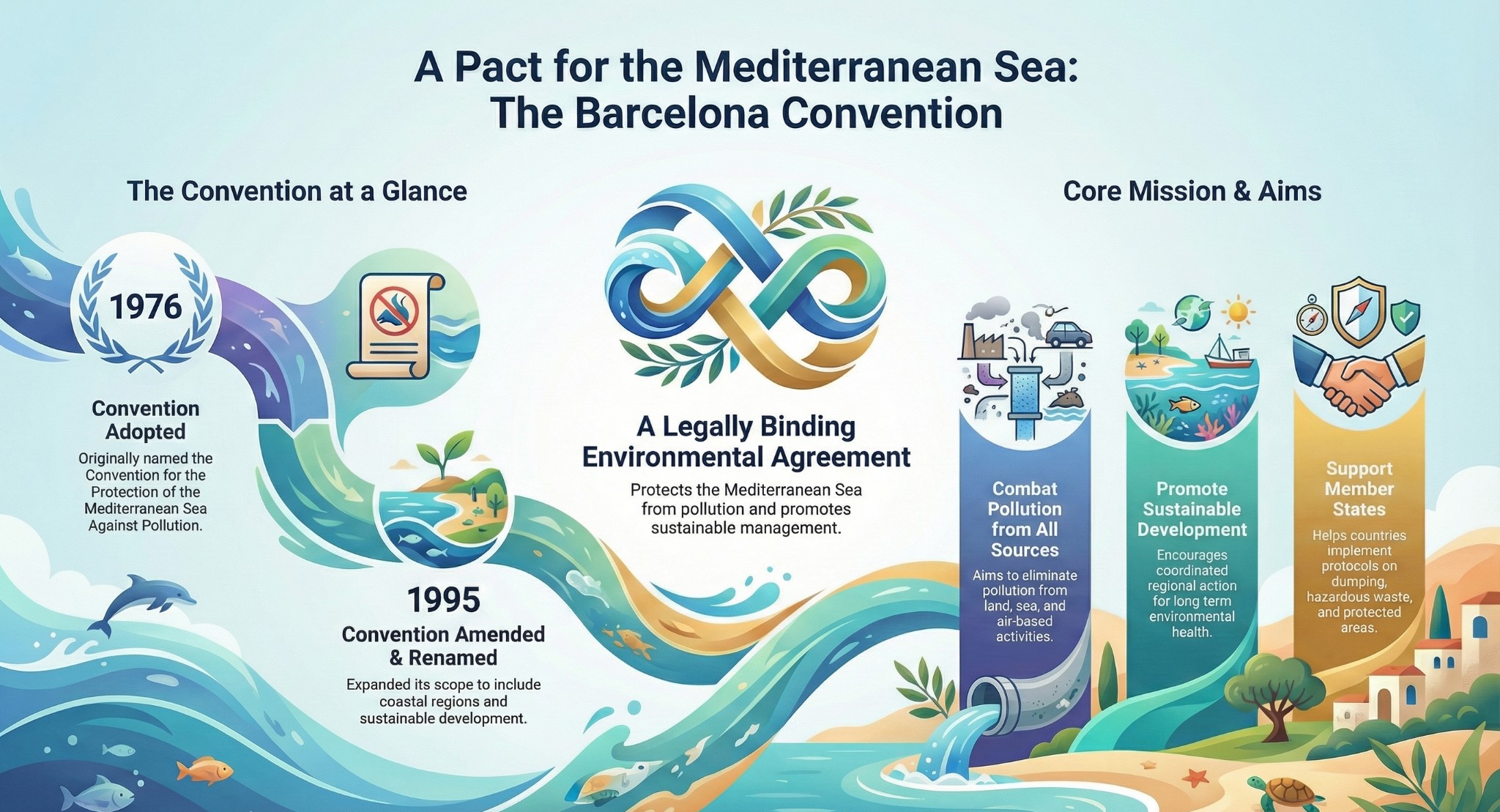
The Barcelona Convention is a legally binding UNEP-led regional environmental agreement for protecting the Mediterranean Sea against pollution and promoting sustainable coastal and marine management.
- Adopted in: 16 February 1976 (originally as the Convention for the Protection of the Mediterranean Sea Against Pollution).
- Entered into force: 1978.
- Amended & Renamed: In 1995, it became the Convention for the Protection of the Marine Environment and Coastal Region of the Mediterranean.
- Aim:
- Prevent, reduce, combat, and eliminate pollution from land-based, marine, and atmospheric sources.
- Promote sustainable development through coordinated regional action.
- Support Mediterranean states in implementing protocols dealing with dumping, emergencies, land-based sources, protected areas, offshore pollution, hazardous waste, and coastal zone management.
About Mediterranean Sea
A semi-enclosed, intercontinental sea between Europe, Asia, and Africa, covering ~2.5 million km² and accounting for ~0.7% of global ocean area. It is a known biodiversity hotspot and the cradle of ancient civilizations.
- Neighboring Nations:
- Europe: Spain, France, Monaco, Italy, Slovenia, Croatia, Montenegro, Albania, Greece.
- Asia: Turkey, Cyprus, Syria, Lebanon, Israel.
- Africa: Egypt, Libya, Tunisia, Algeria, Morocco.
- Key Connections:
- Atlantic Ocean: Connected via the Strait of Gibraltar.
- Black Sea: Connected via the Dardanelles–Marmara–Bosporus system.
- Red Sea: Connected via the Suez Canal.
- Formed by the tectonic convergence of the African and Eurasian plates.
- Divided by the Sicily submarine ridge into western and eastern basins.
- Major Basins: Alborán, Algerian, Tyrrhenian (west); Ionian, Levantine (east).
- Deepest Point: Calypso Deep (5,267 m) in the Ionian Sea.
- Major Islands: Sicily, Sardinia, Corsica, Crete, Cyprus, Lesbos, and Mallorca.
Challenges of the Mediterranean Region
- Pollution Hotspot: The sea is a semi-enclosed basin with slow water renewal (80-100 years), trapping land-based pollutants, untreated sewage, and agricultural runoff, leading to severe eutrophication.
- Plastic Crisis: It is one of the world's most plastic-polluted seas, with microplastics threatening marine life and entering the human food chain.
- Invasive Species ("Lessepsian Migration"): The widening of the Suez Canal and rising temperatures have allowed hundreds of invasive species (like lionfish and jellyfish) from the Red Sea to decimate native biodiversity.
- Overfishing: More than 75% of fish stocks in the Mediterranean are currently overfished, threatening the livelihoods of coastal communities and the ecological balance.
- Mass Tourism Pressure: The region attracts one-third of global tourism, causing massive coastal urbanization, habitat destruction, and seasonal peaks in waste generation.
Recent Concerns
- "Mediccanes" & Warming: The Mediterranean is warming 20% faster than the global average, leading to more frequent "Mediccanes" (Mediterranean Hurricanes) and devastating marine heatwaves.
- Suez Canal Expansion Risks: Recent discussions on further expanding the Suez Canal have raised alarms about accelerating the invasion of non-indigenous species, which the Barcelona Convention is struggling to manage.
- Offshore Drilling: Tensions over gas exploration rights (e.g., in the Eastern Mediterranean) pose risks of oil spills and conflict, complicating unified environmental governance.
- Sea Level Rise: Low-lying deltas, particularly the Nile Delta in Egypt and the Po Delta in Italy, face immediate threats of submersion and salinization due to rising sea levels.
- Implementation Gaps: Despite the COP24 commitments in Cairo, enforcement remains weak in non-EU southern shore countries due to lack of funding and political instability.
Conclusion
The Barcelona Convention remains the primary legal framework protecting the "blue heart" of the region. However, the Mediterranean faces an existential triple crisis of pollution, biodiversity loss, and climate change. Strengthening the convention requires not just diplomatic agreements, but strict enforcement of "polluter pays" principles and urgent decarbonization of the maritime sector to save this historic sea from becoming a "dead sea."