
Digital Constitutionalism
08.12.2025
Digital Constitutionalism
Context
The government’s rapid rollback of its directive mandating the Sanchar Saathi app, following concerns over consent, surveillance, and data misuse has reignited national debate on digital constitutionalism.
About Digital Constitutionalism
Digital constitutionalism refers to the application and extension of core constitutional principles like liberty, dignity, equality, privacy, due process, proportionality, and rule of law to digital spaces, technologies, and governance systems.
- Global Emergence: Arose globally as digital platforms began influencing fundamental rights, political participation, and state power.
- Landmark Rulings: Gained prominence after key privacy rulings, such as the 2017 Puttaswamy judgment in India and the EU’s GDPR (2018), which stressed digital rights, data control, and state accountability.
- Academic Roots: Traces back to early concerns about unchecked digital surveillance, algorithmic governance, and platform dominance.
Features of Digital Constitutionalism:
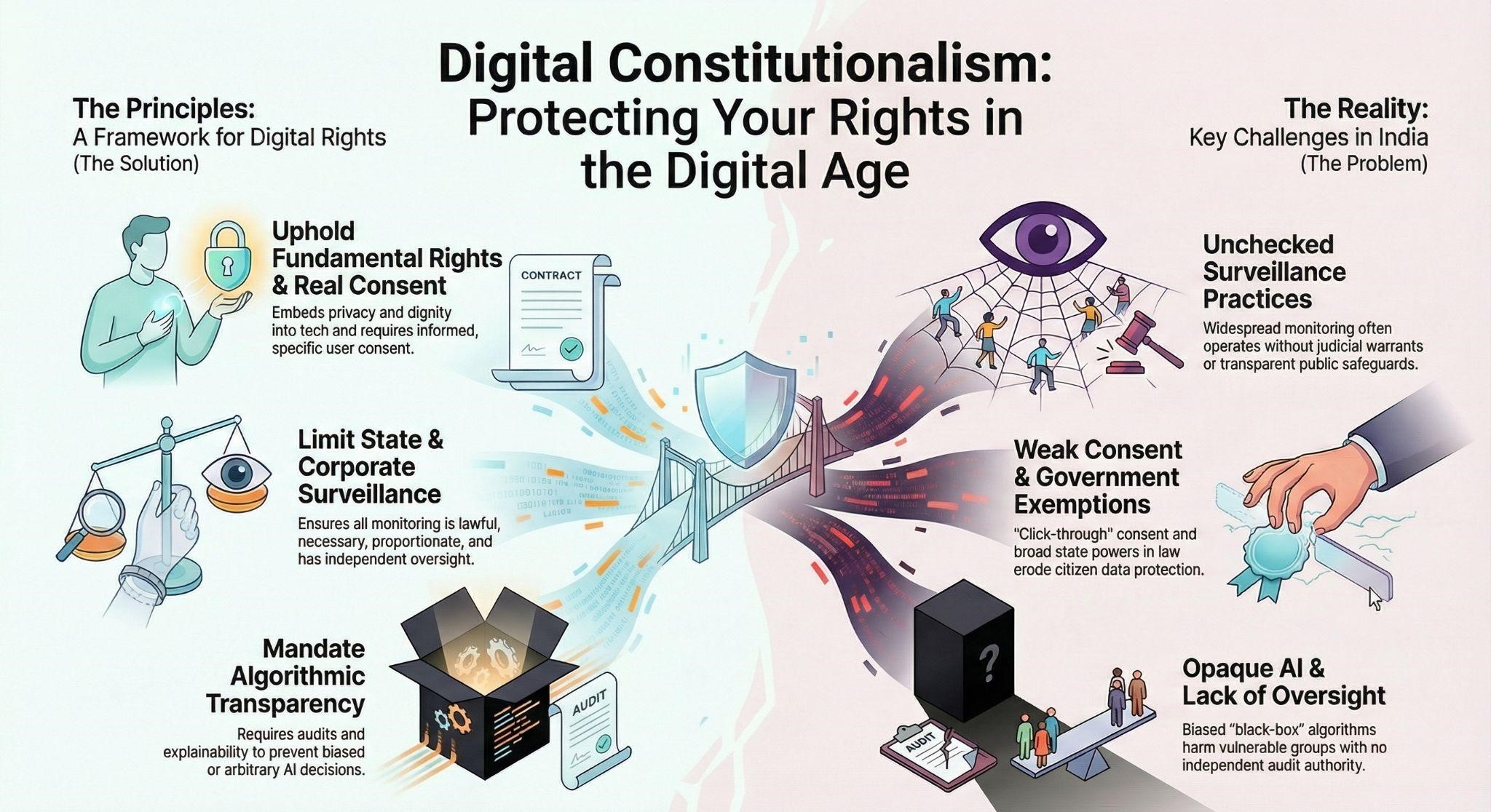
- Rights-based Governance: Embeds privacy, dignity, autonomy, and equality into digital systems, ensuring technology aligns with constitutional values.
- Limits on Surveillance: Ensures state and corporate monitoring is lawful, necessary, proportionate, and subject to independent oversight.
- Algorithmic Transparency: Mandates audits, explainability, and public disclosure of data practices to prevent arbitrary or hidden decision-making.
- Meaningful Consent: Requires informed, voluntary, and specific consent mechanisms that give real control over the use of personal data.
- Anti-discrimination Safeguards: Ensures AI systems are tested for bias so that digital tools do not reinforce existing socio-economic inequalities (e.g., caste, gender, racial bias).
Laws Governing Digital Rights In India
- Article 21 – Privacy as a Fundamental Right: The Puttaswamy (2017) judgment requires all digital intrusions to meet tests of legality, necessity, and proportionality.
- Digital Personal Data Protection (DPDP) Act, 2023: Governs data fiduciaries, consent, and storage, but offers broad exemptions to the state, potentially weakening citizen protections.
- IT Act, 2000 & IT Rules 2021/23: Regulate intermediaries, cybersecurity, and platform liability, though they often prioritize governance over individual rights.
- Aadhaar Act, 2016: Governs biometric identity; mandate’s purpose limitation after Supreme Court scrutiny to prevent misuse for mass surveillance.
- No Dedicated Surveillance Law: Current interception relies on the outdated Telegraph Act (1885) and IT Act (2000), lacking modern judicial oversight and safeguards.
Challenges Associated With Digital Constitutionalism
- Unchecked Surveillance: Practices like facial recognition, metadata tracking, and biometric monitoring operate without judicial warrants or transparent safeguards.
- Weak Consent: Click-through, uninformed consent models erode user autonomy and enable excessive data collection by the state and private actors.
- Government Exemptions: Broad powers under the DPDP Act reduce accountability and allow disproportionate data access without adequate checks.
- Algorithmic Opacity and Bias: "Black-box" AI systems produce discriminatory outcomes, disproportionately affecting vulnerable sections like women, minorities, and the poor.
- Lack of Oversight Institutions: India currently lacks an independent authority to audit algorithms, monitor surveillance practices, or enforce digital rights.
Way Ahead
- Enact a Modern Surveillance Law: Ensure all monitoring requires judicial warrants, proportionality assessments, and independent audits.
- Establish a Digital Rights Commission: Empowered to review algorithms, oversee data practices, investigate violations, and issue binding directions.
- Strengthen DPDP Act: Narrow state exemptions, enhance user remedies, mandate strict retention limits, and ensure greater transparency.
- Regulate Algorithms: Require impact assessments, periodic bias audits, and explainability norms for all high-risk AI systems used in public functions.
- Expand Digital Literacy: Enable citizens to understand data rights, identify risks, and effectively challenge digital governance abuses.
Conclusion
As governance becomes increasingly data-driven, constitutional values must anchor digital transformation. Without strong safeguards, surveillance and algorithmic opacity threaten liberty, equality, and democratic accountability. Digital constitutionalism is essential to ensure that technology remains a tool of empowerment rather than a quiet instrument of control.