
Directorate General of Civil Aviation (DGCA)
08.12.2025
Directorate General of Civil Aviation (DGCA)
Context
IndiGo’s mass flight cancellations forced the DGCA to grant a one-time exemption from the new Flight Duty Time Limitations (FDTL) rules, raising questions about the regulator’s authority and decision-making process.
About Directorate General of Civil Aviation (DGCA)
The DGCA is India’s statutory civil aviation regulator responsible for ensuring aviation safety, airworthiness, and compliance with global standards.
- Established in: Originally created in 1927 (as a government organization); became a statutory body in 2020 under the Aircraft (Amendment) Act.
- Ministry: Functions under the Ministry of Civil Aviation (MoCA).
- Aim: To promote safe, efficient, and reliable air transportation through proactive safety oversight, effective regulation, and alignment with ICAO international standards.
- Safety Oversight & Regulations: Frames and enforces Civil Aviation Requirements (CARs); conducts surveillance, audits, and spot checks of airlines, airports, MROs, and training organizations.
- Aircraft & Airport Certification: Registers civil aircraft, issues Certificates of Airworthiness, and certifies/inspects aerodromes for safety compliance.
- Licensing: Issues licenses to pilots, AMEs, ATCOs, cabin crew, and flight dispatchers; conducts examinations and skill checks.
- Accident & Incident Investigation: Investigates incidents and serious incidents (up to 2250 kg AUW) and implements safety management programs.
- Air Transport Regulation: Grants Air Operator Certificates (AOC) and regulates domestic/international scheduled and non-scheduled flights.
- ICAO Coordination: Ensures Indian aviation rules comply with ICAO standards; participates in USOAP audits and the harmonization of global norms.
- Training & Dangerous Goods Oversight: Approves flying schools and simulation centers; certifies operators handling dangerous goods and regulates air navigation services.
- Ensures Passenger Safety: strict oversight of aircraft, crew rest, maintenance, and airport standards.
- Maintains Operational Discipline: Keeps airlines compliant with safety rules, training norms, and technical requirements.
- Balances Safety and Capacity: As seen in the recent FDTL rollback, it plays a critical role in negotiating between safety norms and operational feasibility.
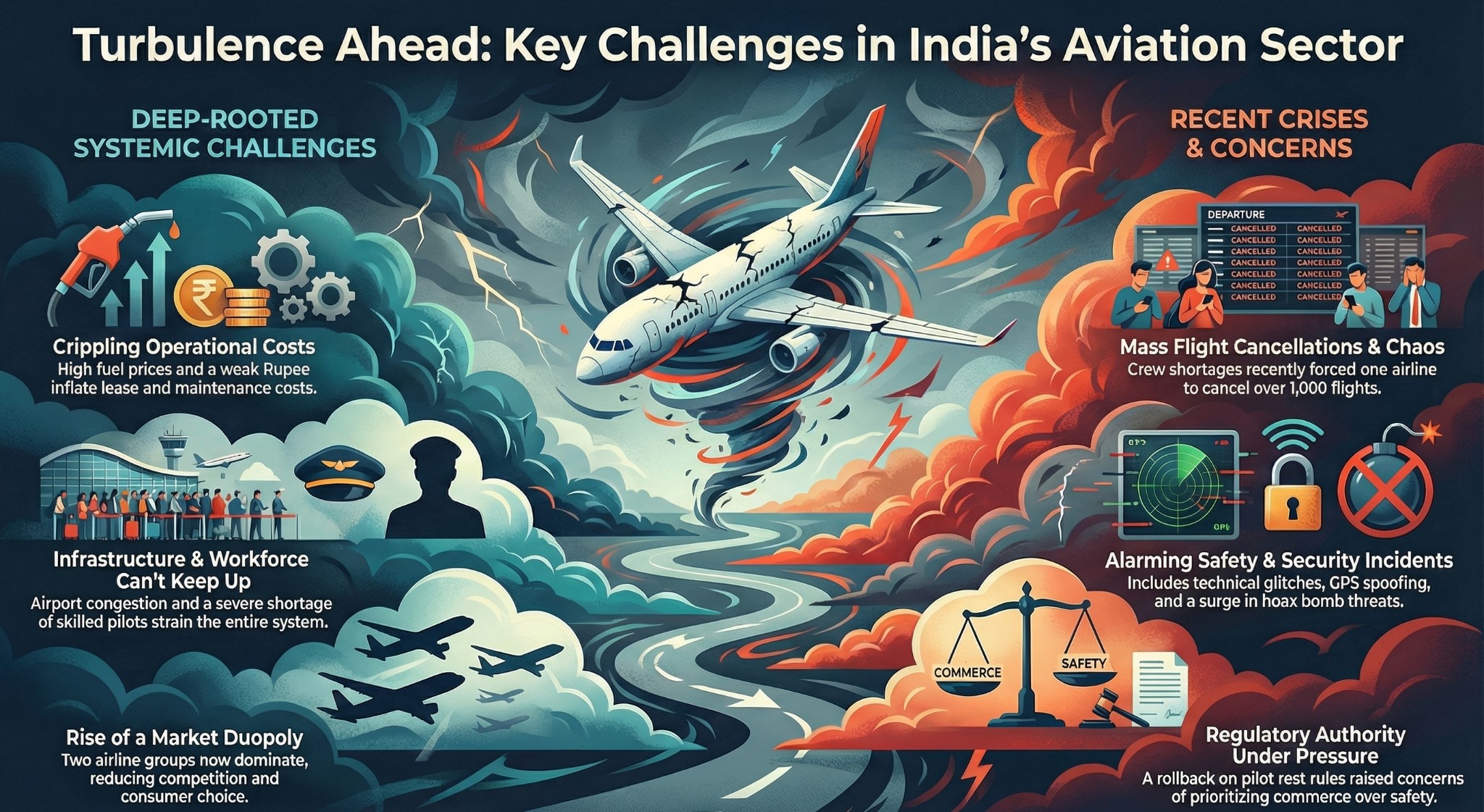
Challenges of Indian Aviation Sector
- High Operational Costs: Airlines struggle with high Aviation Turbine Fuel (ATF) prices (which are not under GST) and a depreciating Rupee, as lease rentals and maintenance costs are dollar-denominated.
- Infrastructure Bottlenecks: Rapid passenger growth has outpaced infrastructure, leading to severe congestion at metro airports, slot constraints, and airspace management issues.
- Supply Chain & Fleet Issues: Global supply chain disruptions have led to delayed aircraft deliveries and the grounding of fleets due to engine issues (e.g., Pratt & Whitney engine troubles).
- Workforce Shortage & Fatigue: An acute shortage of skilled pilots and cabin crew has led to rostering issues, increased fatigue, and difficulty in adhering to stricter FDTL norms.
- Market Concentration (Duopoly): The sector is increasingly dominated by two major groups (IndiGo and Air India), raising concerns about reduced competition, pricing power, and consumer choice following the collapse of rivals like Go First.
Recent Concerns (2025 Context)
- Mass Flight Cancellations: IndiGo’s recent operational meltdown, cancelling over 1,000 flights due to crew shortages and new roster rules, forced the government to impose temporary fare caps.
- Hoax Bomb Threats: A staggering rise in hoax bomb threats (over 800 reported in 2024-25) has caused frequent diversions, delays, and panic, straining security agencies.
- Technical Snags & Safety Lapses: frequent reports of technical glitches (engine shutdowns, cabin smoke) and serious lapses, such as Air India aircraft operating without valid airworthiness certificates.
- GPS Spoofing: Recent incidents of GPS spoofing near Delhi and the Middle East have disrupted navigation systems, posing a new technological threat to flight safety.
- Regulatory "Flip-Flops": The DGCA's rollback of stricter pilot rest rules (FDTL) under airline pressure has drawn criticism for prioritizing commercial operations over pilot fatigue and safety.
Conclusion
The Indian aviation sector stands at a critical juncture, balancing rapid expansion with the imperative of safety. While the DGCA plays a pivotal role in maintaining global standards, recent operational disruptions and safety concerns highlight the need for a more robust regulatory framework. Strengthening infrastructure, addressing workforce fatigue, and ensuring strict enforcement of safety norms are essential to sustain the sector's growth and restore passenger confidence in the "world's fastest-growing aviation market."