
Diwali Added to UNESCO Intangible Cultural Heritage List
11.12.2025
Diwali Added to UNESCO Intangible Cultural Heritage List
Context
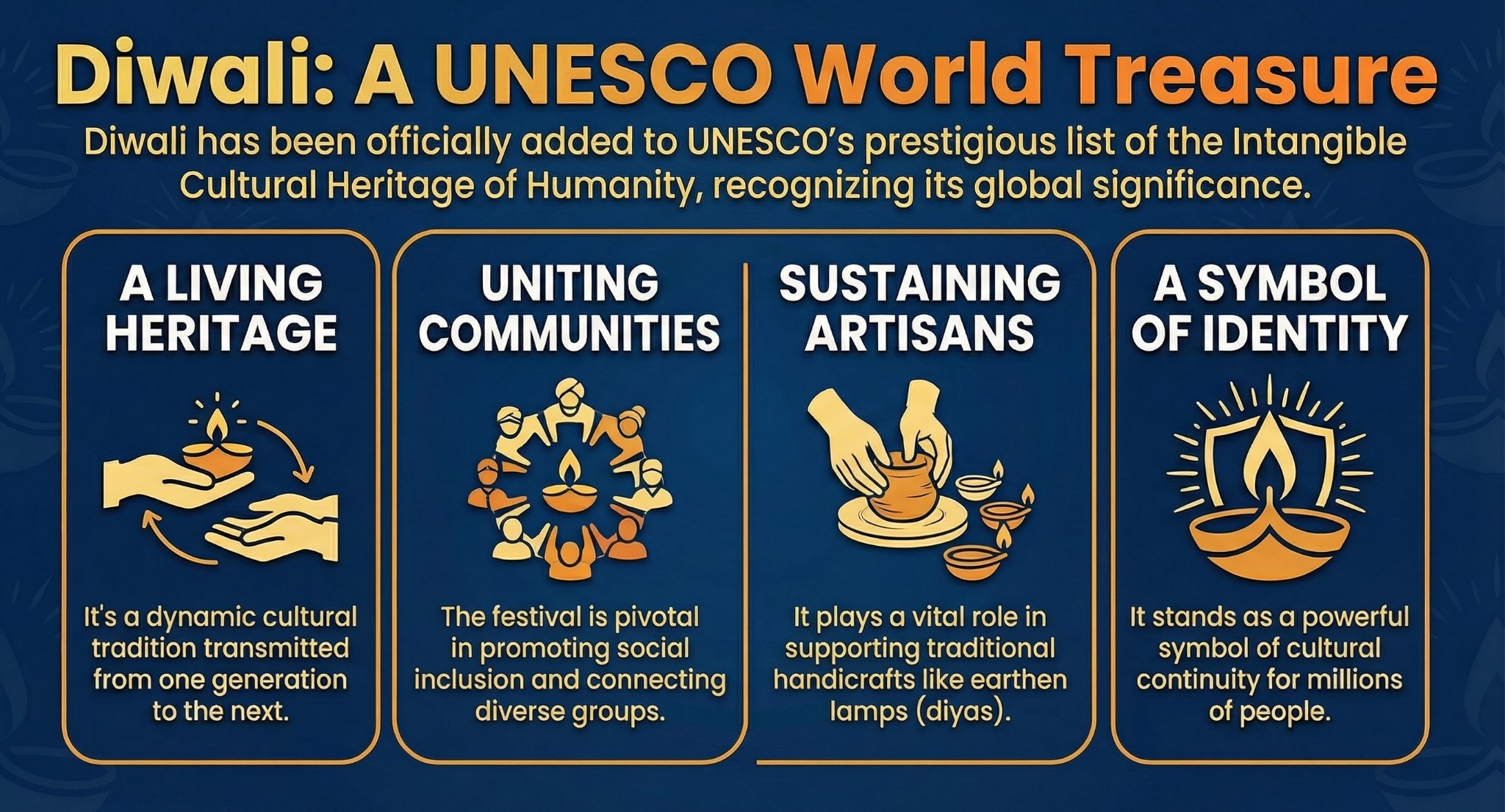
In a landmark decision for Indian culture, Diwali (Deepavali) has been officially inscribed on UNESCO's Representative List of the Intangible Cultural Heritage of Humanity. This recognition underscores the festival's profound cultural resonance and global footprint.
Reasoning for Inclusion
- Living Heritage: UNESCO recognized Diwali not merely as a festival, but as a dynamic cultural heritage transmitted from generation to generation.
- Social Cohesion: The celebration is pivotal in promoting social inclusion and connecting diverse communities.
- Support for Craftsmanship: It plays a vital role in sustaining traditional handicrafts, specifically the artisanal production of earthen lamps (diyas) and decorations.
- Identity: The festival stands as a symbol of identity and continuity for millions of people.
Background on UNESCO List
- Inception: The Representative List was established in 2008 to protect and raise awareness about intangible cultural heritage worldwide.
- India's Legacy: India has a strong presence on the list with diverse entries ranging from performing arts to ancient rituals.
|
Previous Indian Inclusions |
Category |
Elements |
|
Traditions & Rituals |
Intangible Cultural Heritage |
Vedic Chanting; Ramlila; Ramman (Garhwal); Buddhist Chanting (Ladakh); Kumbh Mela; Durga Puja; Garba (Gujarat) |
|
Performing Arts |
Intangible Cultural Heritage |
Kutiyattam (Sanskrit theatre); Mudiyettu (Kerala); Kalbelia (Rajasthan); Chhau dance; Sankirtana (Manipur) |
|
Knowledge & Skills |
Intangible Cultural Heritage |
Thatheras (Punjab brass/copper craft); Yoga; Navroz |
Significance
- Global Validation: This inclusion serves as an international validation of Diwali as a distinct cultural asset.
- Awareness: While the status does not provide direct financial aid, it significantly boosts global visibility and encourages the preservation of the traditions associated with the festival.