
Goa Nightclub Fire & Urban Fire Safety
08.12.2025
Goa Nightclub Fire & Urban Fire Safety
Context
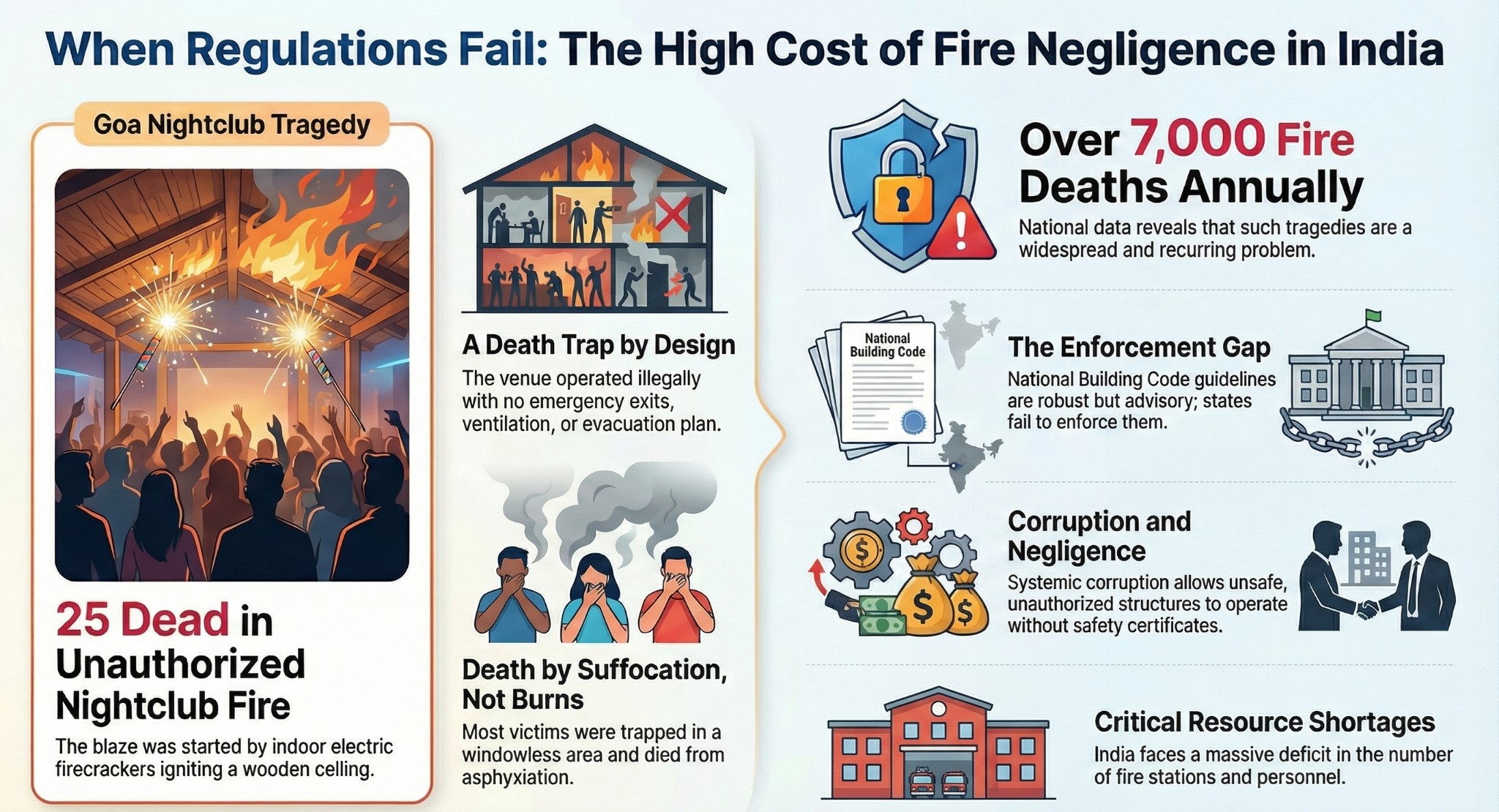
A devastating fire at the 'Birch by Romeo Lane' nightclub in Goa has claimed 25 lives, mostly due to suffocation. The tragedy has reignited the debate on the glaring gaps in urban fire safety implementation and the rampant violation of building codes in India's hospitality sector.
About the Incident
- The Event: A massive fire engulfed an unauthorized nightclub in Arpora, Goa.
- Primary Cause: The blaze was triggered by electric firecrackers used indoors, which ignited the wooden ceiling.
- Casualties: 25 people died, primarily due to asphyxiation (suffocation) rather than burns, as victims were trapped in a small, windowless area with no ventilation.
- Key Negligence Factors:
- Illegal Operations: The club operated with an expired license and was an unauthorized structure.
- Safety Violations: There were no emergency exit doors, fire evacuation plans, or proper ventilation, turning the venue into a death trap.
- Ignored Norms: The establishment flagrantly violated the National Building Code (NBC) safety norms.
Regulatory Framework for Fire Safety in India
1. National Building Code (NBC) of India, 2016
- What it is: A comprehensive set of guidelines for construction, maintenance, and fire safety, originally introduced in 1970 and revised in 2016.
- Part 4 (Fire and Life Safety): Specifically deals with fire prevention, life safety, and fire protection.
- Key Provisions:
- Mandates automatic fire detection and alarm systems in high-risk buildings.
- Specifies requirements for exits (width, number, and location) to ensure safe evacuation.
- classifies buildings based on occupancy (e.g., assembly, industrial, residential) and prescribes specific safety measures for each.
2. Model Building Bye-Laws, 2016
- Purpose: Issued by the Ministry of Urban Development to guide states and Union Territories in framing their own building regulations.
- Focus: Emphasizes structural safety, disaster management, and streamlined approval processes for building permits.
- Fire Services: It is a State Subject (Entry 5 of Schedule XII) and falls under the domain of Municipalities (Article 243W of the Constitution).
Challenges & Gaps in Safety
- Implementation Deficit: While the NBC provides robust guidelines, they are advisory in nature. States often delay incorporating them into local building bye-laws, leading to weak enforcement.
- The "Corruption Nexus": As highlighted in the Goa incident, systemic corruption allows unauthorized structures to operate without valid Fire No-Objection Certificates (NOCs) or licenses.
- Infrastructure Bottlenecks: Unplanned urbanization has resulted in narrow lanes and congested clusters, making it difficult for fire tenders to reach incident sites promptly.
- Resource Scarcity: According to government data, Indian fire services face a massive shortage of fire stations (over 60% deficit) and firefighting personnel.
- Lack of Awareness: Public spaces often lack clear signage or evacuation drills. In panic situations, occupants are unaware of exit routes.
Recent Concerns
- Rising Toll: NCRB data indicates over 7,000 deaths occur annually in India due to fire incidents, highlighting that Goa is not an isolated case.
- Hospital Fires: Recent tragic fires in hospitals (e.g., Delhi, Rajkot) share similar patterns of negligence like blocked exits, dysfunctional equipment, and expired audits.
- Toxic Materials: The increasing use of highly flammable synthetic materials (like the foam and wood in the Goa club) in modern interiors accelerates fire spread and toxic smoke generation.
Way Forward
- Mandatory Compliance: States must make NBC 2016 guidelines legally binding for all commercial establishments, with zero tolerance for violations.
- Third-Party Audits: Move beyond government inspections to mandatory annual third-party safety audits for high-footfall venues like clubs, malls, and hospitals.
- Tech Integration: Use drones for aerial inspection of unauthorized rooftop structures and IoT-based sensors for real-time fire detection.
- Accountability: Establish a clear chain of command where municipal officials are held personally liable for lapsing licenses in their jurisdiction.
- Public Empowerment: "Right to Safety" should be empowered by displaying valid Fire NOCs at the entrance of all public venues, allowing citizens to make informed choices.
Conclusion
The Goa tragedy serves as a grim reminder that safety cannot be a byproduct of compliance; it must be a prerequisite for operation. To prevent such "man-made disasters," India needs a paradigm shift from reactive firefighting to proactive fire prevention, anchored in strict enforcement and civic responsibility.