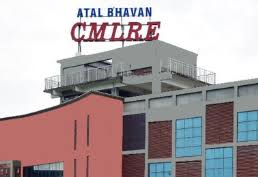
Bhavasagara Referral Centre
Bhavasagara Referral Centre
On March 30, 2026, the Ministry of Environment, Forest and Climate Change (MoEFCC) marked a watershed moment in India’s environmental history by officially designating the Bhavasagara Referral Centre as a National Repository for Deep-Sea Fauna. Established under the stringent legal provisions of the Biological Diversity Act, 2002, this designation elevates the facility from a research unit to a statutory custodian of the nation's marine heritage. Located at the Centre for Marine Living Resources & Ecology (CMLRE) in Kochi, the Bhavasagara Centre now stands as the primary institutional gatekeeper for biological resources extracted from the mysterious and largely unexplored depths of the Indian Ocean. This move reflects a growing global recognition that the deep sea is not merely a void of water, but a complex, fragile ecosystem requiring sophisticated legal and scientific oversight to prevent exploitation.
The Genesis and Mandate of Bhavasagara
Bhavasagara, a name that evokes the vastness of the "ocean of existence," is more than just a storage facility; it is a specialized scientific hub designed to bridge the gap between deep-sea exploration and taxonomic documentation. As a high-tech custody center, it manages both physical biological specimens and their associated digital genetic blueprints. Operating under the Ministry of Earth Sciences (MoES) and managed by CMLRE, its primary mandate is to serve as a foundational resource for the global scientific community. By centralizing deep-sea data, the centre aims to strengthen India’s Blue Economy, a sustainable economic model that seeks to harness ocean resources while ensuring ecological integrity. Furthermore, the centre aligns India’s domestic efforts with the UN Decade of Ocean Science for Sustainable Development (2021–2030), fostering international expertise in deep-sea taxonomy and seafloor mapping.
A Comprehensive Archive of Marine Biodiversity
One of the most striking features of the Bhavasagara Referral Centre is its extensive biological archive, which currently houses over 3,500 taxonomically identified and geo-referenced voucher specimens. This is not a random collection; each specimen is meticulously documented with its precise coordinates, depth of collection, and environmental parameters at the time of capture. The diversity of the collection is staggering, covering a wide biological spectrum from microscopic invertebrates to large deep-sea vertebrates.
The repository includes a vast array of invertebrates, such as Cnidarians (deep-sea corals and jellyfish), Annelids (segmented worms), Molluscs, and Arthropods. It also features a significant collection of Echinoderms, which are vital indicators of seafloor health. On the vertebrate side, the centre preserves rare Elasmobranchs (deep-sea sharks and rays) and various teleostean fishes that have evolved unique physiological traits to survive the crushing pressures and absolute darkness of the aphotic zone. This physical library allows scientists to track changes in species morphology over decades.
Genetic Custody and the Future of Marine Biotechnology
In the modern era of science, physical preservation is only half the battle. Bhavasagara is uniquely authorized to maintain Genetic Custody over its specimens. This involves the ultra-cold preservation of DNA sequences and tissue samples alongside the physical "vouchers." Such a comprehensive record of marine genetic resources is invaluable for the burgeoning field of marine biotechnology. Many deep-sea organisms possess "extremophilic" traits, biological adaptations that allow them to thrive in extreme heat near hydrothermal vents or in freezing temperatures at the ocean floor. By cataloging these genetic sequences, the centre provides a library of information that could lead to breakthroughs in medicine, enzyme production, and climate-resilient technologies. This statutory role ensures that India’s genetic wealth is protected from "biopiracy" and remains available for ethical, domestic research.
The Custodian of "Type Specimens" and New Discoveries
A critical function of a National Repository is its role as the official home for "Type Specimens." In taxonomy, a type specimen is the specific individual organism used to describe and name a new species for the first time. Whenever a researcher discovers a new deep-sea inhabitant within the Indian Exclusive Economic Zone (EEZ), the Biological Diversity Act mandates that the representative sample be deposited in a recognized national repository. Bhavasagara acts as this official sanctuary. This ensures that even if the original researchers move on or laboratories close, the physical evidence of the discovery remains accessible to the global scientific community for verification and further study. This role is increasingly vital as India’s Deep Ocean Mission (DOM) begins to send manned submersibles and remotely operated vehicles (ROVs) to the seafloor, where thousands of species remain unknown to science.
Strategic Synergy with the Deep Ocean Mission (DOM)
The designation of the Bhavasagara Referral Centre is timed to provide critical infrastructure for India’s ambitious Deep Ocean Mission. As a multi-billion dollar initiative, the DOM aims to explore the central Indian Ocean for polymetallic nodules and hydrothermal sulfides resources essential for the global green energy transition. However, deep-sea mining poses significant risks to biodiversity. Bhavasagara provides the "scientific baseline" required for this mission. Before any large-scale extraction can occur, scientists must understand what life forms exist on the seabed. By acting as the analytical and storage wing of the DOM, Bhavasagara ensures that economic exploration is balanced with environmental baseline data, allowing for "precautionary" management of the seafloor and the mitigation of cumulative harm to the deep-sea benthos.
Ensuring Scientific Sovereignty and Global Leadership
Beyond the laboratory, the Bhavasagara Centre represents a move toward Scientific Sovereignty. In the past, many unique specimens collected from Indian waters ended up in Western museums or private collections due to a lack of sophisticated domestic repositories. By establishing a world-class facility in Kochi, India ensures that its biological data and physical specimens are managed and stored within its own borders. This protects national interests and ensures that Indian scientists have primary access to the country's natural heritage.
Furthermore, the centre positions India as a leader in the Indian Ocean Rim Association (IORA). As a regional hub for deep-sea taxonomy, Bhavasagara can provide training and data-sharing opportunities for neighboring littoral states, enhancing India’s role as a "Net Security Provider" not just in terms of defense, but in terms of environmental and scientific stability. It facilitates a collaborative atmosphere where data on trans-boundary species can be shared responsibly to protect the common heritage of the Indian Ocean.
Conclusion: Building the Infrastructure of the Future
The designation of the Bhavasagara Referral Centre as a National Repository is far more than a bureaucratic milestone; it is a profound investment in the future of our planet. As we face the dual crises of climate change and biodiversity loss, understanding the deep ocean, the Earth’s largest carbon sink and most extensive habitat is no longer optional. By centralizing the study of deep-sea fauna, India is not merely archiving the biological remnants of the past. It is actively building the intellectual and physical infrastructure required to lead the global Blue Economy. Through the work at Bhavasagara, the mysteries of the deep sea are being decoded, ensuring that the "ocean of existence" remains vibrant, protected, and understood for generations to come. This facility ensures that as India reaches for the stars, it remains deeply committed to the silent, dark frontiers of its own backyard.