Guarding the Silent Ranks: Navigating the 2026 Regulations on Military Memoirs
Guarding the Silent Ranks: Navigating the 2026 Regulations on Military Memoirs
The intersection of military service and the literary world has long been a source of historical enrichment, providing the public with insights into the minds of those who lead in times of crisis. However, the digital age has transformed the speed and impact of information dispersal, necessitating a more rigorous approach to what can be shared in the public domain. In early 2026, the Ministry of Defence (MoD) moved to formalize comprehensive guidelines regarding the publication of books by defense personnel. This was not merely an administrative update but a fundamental shift in the "social contract" between the state and its protectors. The primary driver was a realization that the previous "gentleman’s agreement" regarding memoirs was insufficient for a landscape dominated by viral leaks and geopolitical sensitivity.
The Catalyst of Controversy: "Four Stars of Destiny"
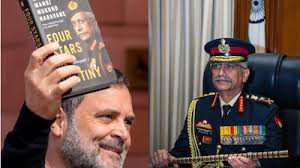
The immediate impetus for these stringent regulations was the intense political and security storm surrounding the memoir of former Chief of Army Staff (COAS), General M.M. Naravane, titled Four Stars of Destiny. While memoirs by retired generals are common, this specific manuscript touched upon raw, contemporary geopolitical nerves. Specifically, it allegedly contained granular details regarding high-level decision-making during the 2020 Galwan Valley clash and the subsequent standoff at the Line of Actual Control (LAC).
The controversy deepened when excerpts began circulating on social media before the Ministry of Defence had granted formal clearance. The situation reached a crescendo when hardbound copies surfaced in the hands of political leaders in Parliament, leading to accusations that sensitive operational secrets including internal debates on the Agnipath recruitment scheme and mobilization strategies were being used as political fodder. This "Naravane-style" deadlock highlighted a dangerous legal grey area: the transition from an active-duty officer, bound by strict military law, to a retired veteran, where the boundaries of "operational secrecy" often became blurred.
The 2026 Framework: Mandatory Pre-Publication Clearance
To close these loopholes, the 2026 guidelines mandate a universal "Pre-publication Clearance" (PPC) mechanism. This requirement is no longer a matter of professional courtesy but a statutory obligation for both serving and retired personnel of the Army, Navy, and Air Force. Under this framework, any manuscript that discusses service matters, operational history, or national security must be submitted to the Ministry of Defence. Typically, this process is routed through specialized departments like the Directorate General of Military Intelligence (DGMI).
The vetting process is designed to be exhaustive. Specialized committees review the text to identify "sensitive operational data." This includes not only tactical movements and equipment capabilities but also the nuances of high-level diplomatic conversations and intelligence inputs. The objective is to ensure that while an officer may share their personal journey, they do not inadvertently provide adversaries with a "roadmap" of India’s strategic vulnerabilities or internal decision-making processes.
Permanent Accountability: The Shadow of the Official Secrets Act
A core pillar of the new regulations is the reinforcement of the Official Secrets Act (OSA), 1923. The 2026 guidelines serve as a stern reminder to the veteran community that the oath of secrecy does not expire with retirement. The OSA is a lifelong obligation. While a civilian might be protected by broader interpretations of free speech, a retired officer possesses specialized knowledge that, if disclosed, could cause irreparable harm to the state.
The guidelines clarify that retired officers do not enjoy the same immunity as regular citizens when discussing information obtained during their tenure. The state maintains that "proprietary knowledge" regarding national security belongs to the institution, not the individual. By formalizing this, the MoD has sent a clear message: the transition from uniform to civilian clothes does not liberate an individual from the legal consequences of breaching the OSA. This "permanent accountability" ensures that the strategic silence maintained during service continues to protect the nation long after the officer has hung up their boots.
The Financial Deterrent: Linking Pensions to Secrecy
Perhaps the most potent tool in the government’s new arsenal is the integration of the Central Civil Services (Pension) Amendment Rules, 2021. By specifically invoking Rule 8, the government has created a direct financial link between an officer’s conduct and their post-retirement benefits. This is particularly relevant for personnel who served in intelligence or security-related organizations listed under the 2nd Schedule of the RTI Act.
Under these rules, the government reserves the right to withhold or even withdraw the pension of a retired official if they publish "domain-related" sensitive information without prior clearance. This shift from criminal prosecution (which can be a long and arduous process) to administrative financial penalties provides the MoD with a swift and effective deterrent. It forces a pause in the mind of any prospective author, ensuring that the desire for a "bestselling memoir" does not outweigh the security of their financial future.
Differentiating the Ranks: Serving vs. Retired Regulations
The 2026 guidelines provide a clear comparative matrix to distinguish how the law applies across different stages of a military career. For serving personnel, the primary regulations remain the respective Service Acts (Army, Navy, and Air Force Acts). In this phase, prior written permission is an absolute necessity, and any breach is dealt with via the military’s internal legal system, often leading to a Court Martial.
For retired personnel, the legal landscape shifts toward statutory and civil law, primarily governed by the OSA and the updated Pension Rules. While the former is governed by "Military Law," the latter is governed by "Public Law." The penalty for a breach also evolves: a serving officer faces immediate disciplinary action and loss of rank, while a veteran faces potential criminal prosecution and the revocation of their pension. This dual-layered approach ensures that there is no "safe window" between active service and retirement where secrets can be safely leaked.
The Great Balance: National Security versus Freedom of Speech
At the heart of this regulatory overhaul is a profound constitutional tension: the balance between Article 19(1)(a) the right to freedom of speech and the "reasonable restrictions" permitted under Article 19(2) in the interest of national security. The government’s stated objective is not to "stifle" the intellectual growth of the armed forces or to erase military history. On the contrary, the contributions of veterans are vital for strategic discourse and the education of future generations of leaders.
However, the "right to know" of the public is curtailed when it conflicts with the "need to keep secret" tactical strategies and diplomatic nuances. The 2026 guidelines aim to find an equilibrium where veterans can still act as "public intellectuals" and historians, provided they adhere to the vetting process. The goal is to allow the "stars of destiny" to shine through the pages of history without exposing the "blueprint of defense" to the eyes of those who would wish the nation harm.
Conclusion: A New Era of Professional Reticence
The 2026 guidelines represent a "zero-tolerance" evolution in India’s defense policy. By moving away from an informal culture of trust to a codified system of vetting and penalties, the Ministry of Defence has recognized the high stakes of modern information warfare. The transition ensures that the memoirs of the future will be categorized by historical depth rather than sensationalist leaks. Ultimately, these regulations reinforce the idea that the greatest service an officer can provide is often found in the silence they keep, ensuring that the safety of the nation remains the paramount "destiny" for all who serve.