The Uncounted Millions: Restoring Dignity to India’s Denotified Tribes
The Uncounted Millions: Restoring Dignity to India’s Denotified Tribes
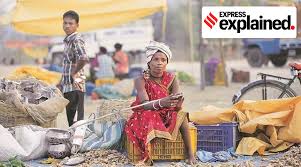
The year 2026 has marked a pivotal moment in India’s socio-political discourse, as the "invisible citizens" of the country the Denotified, Nomadic, and Semi-Nomadic Tribes (DNTs) have intensified their decades-long struggle for recognition. For nearly 150 years, these communities have lived in a state of "legal limbo," transitioning from being branded "born criminals" under colonial rule to being "denotified" in independent India, yet remaining largely excluded from the nation’s growth story. The current demand for a separate census classification and explicit constitutional status is not merely an administrative request; it is a plea for the restoration of human dignity and the right to exist without the shadow of historical stigma.
The Colonial Shadow: Branded as "Born Criminals"
The marginalization of DNTs is rooted in the draconian Criminal Tribes Act of 1871. Under this British-era legislation, over 200 communities were "notified" as hereditary criminals. The colonial administration operated on the flawed assumption that criminality was a genetic trait passed down through generations. Consequently, entire families including children were subjected to constant surveillance, restricted movement, and forced labor in settlement camps. This law did more than just restrict freedom; it institutionalized social prejudice, effectively turning community identity into a criminal record.
Although India repealed this act in 1952, the liberation was only partial. The "denotified" status meant they were no longer criminals by law, but they were immediately subjected to the Habitual Offenders Act. In practice, this allowed local police to continue profiling and harassing these communities under a different legal banner. For over seven decades, the "criminal" tag has shifted from the statute books to the societal psyche, ensuring that DNTs remain the most policed and least protected citizens of the country.
The Crisis of Invisibility: A Fragmented Identity
One of the most significant barriers to the empowerment of DNTs is the lack of a unified identity. Currently, DNT communities are scattered across the existing constitutional categories of Scheduled Castes (SC), Scheduled Tribes (ST), and Other Backward Classes (OBC). This fragmentation varies from state to state; a tribe might be classified as an ST in one region but relegated to the OBC list in another.
This "category confusion" leads to a phenomenon known as the Citizenship Gap. Because many DNTs are nomadic or semi-nomadic, they lack permanent addresses, making it nearly impossible to obtain basic identity documents like Aadhaar cards, ration cards, or caste certificates. Without these, they are "ghost citizens" present in the population but absent from the welfare rolls. The fragmentation also dilutes their political voice, as they are often overshadowed by more dominant groups within the SC or OBC categories who corner the bulk of reservation benefits.
Lessons from the Renke and Idate Commissions
Understanding the depth of this crisis requires revisiting the landmarks of official inquiry. The Renke Commission (2008) was a watershed moment, revealing that a staggering 90% of DNTs lacked basic identity documents. It was the first to recommend that DNTs be treated on par with SCs and STs, suggesting a 10% separate reservation even if it pushed the legal limits of quotas.
Building on this, the Idate Commission (2015) conducted a massive nationwide study, identifying over 1,200 DNT communities. However, it also uncovered a more alarming fact: nearly 267 communities were not included in any SC, ST, or OBC list at all, leaving them completely outside the umbrella of constitutional protection. The commission's call for a Permanent Statutory Commission for DNTs remains a central demand today, as the current Development and Welfare Board (DWBDNC) lacks the constitutional "teeth" to enforce policy changes or address grievances effectively.
Systemic Challenges: Stigma, Education, and Livelihood
The challenges faced by DNTs are multi-layered and reinforcing. The most persistent is societal stigma. Even in 2026, many nomadic groups are viewed with suspicion by settled society, leading to frequent evictions and social ostracism. This bias is mirrored in the criminal justice system; studies have shown that members of DNT communities are disproportionately targeted for preventive detention and wrongful arrests.
Economically, traditional livelihoods have been criminalized by modern environmental and wildlife laws. Occupations such as snake charming, street performing, and pastoralism once the cultural backbone of these tribes are now often illegal. This forced transition has pushed millions into extreme poverty and informal labor. Furthermore, the nomadic lifestyle is inherently at odds with a fixed education system. Children of these tribes often have the highest dropout rates because schools are not equipped to handle mobile populations.
The Path to 2027: Enumeration as Empowerment
The way forward begins with counting the uncounted. The demand for a separate column in the 2027 Census is the most critical step toward data-driven governance. Without an accurate population count and district-wise mapping, the government cannot allocate proportional funds or design targeted schemes. Inclusion in the census is the first step toward "official existence."
Beyond counting, there is a dire need for legal and constitutional reform. Community leaders are advocating for a separate Schedule in the Constitution, similar to the 5th and 6th Schedules, to protect their unique heritage. Amending the SC/ST (Prevention of Atrocities) Act to explicitly include DNTs would provide much-needed legal recourse against systemic harassment.
Revolutionizing Welfare through SEED
On the ground, the Scheme for Economic Empowerment of DNTs (SEED) represents the government's primary welfare vehicle. However, as of early 2026, the utilization of funds remains a challenge. To make SEED effective, the government must move toward a "Mobile Welfare" model.
- Mobile Schools and Clinics: Inspired by global models for pastoralists, India should deploy mobile units to provide education and healthcare to moving populations.
- Skill Diversification: SEED should focus on modernizing traditional skills for instance, transitioning folk performers into the digital "Orange Economy" (creative industry) or helping pastoralists with modern dairy cooperatives.
- IP-Backed Livelihoods: Recognizing traditional arts and crafts as intellectual property could provide these tribes with a sustainable income stream and cultural pride.
Conclusion: From Denotified to Dignified
The transition of the Denotified Tribes from the fringes of society to the mainstream is the ultimate test of India's commitment to "Antyodaya" the upliftment of the very last person. Decriminalization in 1952 was a legal necessity, but the true liberation of these communities requires a social and constitutional revolution. By granting them a separate identity in the census and explicit protection in the Constitution, India can finally close the chapter on colonial injustice. As the nation marches toward "Viksit Bharat 2047," it must ensure that its original nomadic inhabitants are not left behind in the dust of progress, but are instead recognized as equal partners in the journey.