Kavach 4.0: Revolutionizing Railway Safety Through Indigenous Innovation
Kavach 4.0: Revolutionizing Railway Safety Through Indigenous Innovation
The landscape of Indian transportation is undergoing a tectonic shift, driven by the dual imperatives of high-speed efficiency and uncompromising safety. In early 2026, a milestone was reached when the Union Railway Minister confirmed to the Lok Sabha that Kavach 4.0, the latest iteration of India’s homegrown Automatic Train Protection (ATP) system has been successfully operationalized across 1,452 route kilometers. This deployment, strategically concentrated on the high-density Delhi–Mumbai and Delhi–Howrah corridors, represents more than just a technological upgrade; it is a foundational pillar of the "Viksit Bharat" vision. By integrating advanced electronics with real-time telecommunications, Kavach 4.0 is designed to eliminate the margin of human error that has historically been the primary cause of rail mishaps.
The Genesis and Architecture of India’s Shield
Kavach is not merely a piece of equipment but a comprehensive ecosystem of safety, developed entirely within India. The system was conceptualized and brought to fruition by the Research Design and Standards Organisation (RDSO) in close partnership with domestic industry leaders. This collaborative effort has resulted in a state-of-the-art electronic safety mechanism that meets the world’s most stringent benchmarks. Notably, Kavach 4.0 is certified for Safety Integrity Level-4 (SIL-4), which is the highest possible global standard for safety assurance in the railway sector. This certification implies a probability of failure so low that the system is considered a near-perfect fail-safe against catastrophic collisions.
Mechanics of Collision Prevention: How Kavach Operates
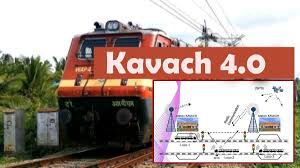
At its core, Kavach 4.0 functions as a sophisticated "digital watchdog" that monitors the movement of trains with millisecond precision. The system operates through a tripartite communication network consisting of trackside, on-board, and stationary infrastructure. Along the tracks, Radio Frequency Identification (RFID) tags are embedded at regular intervals to transmit precise location data and track identities. Simultaneously, locomotives are equipped with an advanced on-board computer and a specialized radio unit. These units maintain a constant dialogue with radio towers situated at railway stations. By synthesizing data from these sources, the system calculates the "Movement Authority", the distance a train is permitted to travel safely. If the system detects that a train is approaching a red signal or another locomotive on the same track, it calculates the required braking distance and autonomously engages the brakes if the pilot fails to act.
Version 4.0: Precision in Complex Environments
The transition from earlier versions to Kavach 4.0 brings significant enhancements in operational accuracy. One of the primary improvements is in location precision, which is critical when navigating complex railway yards where multiple tracks converge and diverge in close proximity. Version 4.0 is engineered to handle dense signal information more efficiently, ensuring that the system can distinguish between various track occupancies without lag. This level of detail allows for safer and more frequent train movements, effectively increasing the capacity of the existing rail network without compromising on the safety envelope.
Seamless Integration with Electronic Interlocking
A standout feature of the 4.0 iteration is its direct integration with Electronic Interlocking (EI) systems. Interlocking is the nervous system of railway signaling, ensuring that conflicting movements are physically impossible. By interfacing directly with EI, Kavach 4.0 receives real-time, high-fidelity updates on the status of signals and points across the track. This synergy allows the system to react instantaneously to changing conditions. Furthermore, the use of a robust communication mix, involving Ultra High Frequency (UHF) radio and high-speed Optical Fiber Networks, ensures that the link between the station and the locomotive remains uninterrupted, even in remote geographical areas or under heavy electromagnetic interference.
Overriding Human Error and the SOSR Protocol
Despite the rigorous training of loco pilots, human fatigue and lapses in judgment remain persistent challenges in rail operations. Kavach 4.0 acts as a definitive fail-safe against Signal Passing at Danger (SPAD), a leading cause of major accidents. If a pilot fails to respond to a cautionary or red signal, or if the train exceeds the dynamically calculated speed limit for a particular section, the system overrides manual control to decelerate the train. Additionally, the system features a unique "Save Our Souls" (SOSR) broadcast capability. In the event of an emergency, a locomotive or station can broadcast a distress signal that is instantly received by all Kavach-enabled trains within a specific radius, bringing them to an immediate halt to prevent secondary collisions or large-scale disasters.
Economic and Operational Significance of Indigenous Tech
The impact of Kavach 4.0 extends beyond immediate safety to the broader economic health of the Indian Railways. Since 2014, consequential train accidents have declined by nearly 90%, and Kavach is poised to bring that number closer to zero. Operationally, the system provides "Fog Resilience," allowing trains to maintain higher, yet safe, speeds during dense winter fog when visibility is near zero. Economically, the indigenous nature of Kavach is a game-changer; it costs approximately one-fourth of the price of international systems like the European Train Control System (ETCS). This cost-efficiency allows the government to scale the deployment at a pace that would otherwise be financially prohibitive, ensuring that the safety net expands across the entire 68,000-kilometer national network rapidly.
Conclusion: A Global Blueprint for Railway Safety
Kavach 4.0 represents the pinnacle of "Made in India" ingenuity, proving that India can develop world-class deep-tech solutions for its unique infrastructural challenges. By transitioning the railway network from a purely human-monitored system to a machine-shielded one, the nation is setting a new global benchmark for rail safety. The successful implementation of this technology on India's busiest corridors not only protects millions of passengers daily but also positions India as a potential exporter of affordable safety technology to other developing nations. As Kavach 4.0 continues to roll out, it ensures that the future of Indian rail is one where high speed, high capacity, and absolute safety are no longer mutually exclusive.