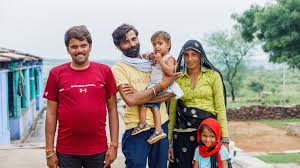
Rebuilding Rural India: Pathways to Inclusive and Sustainable Development
Rebuilding Rural India: Pathways to Inclusive and Sustainable Development
Rural India continues to be the heart of the nation—socially, culturally, and economically. With nearly two-thirds of Indians living in villages, the countryside holds the key to the country’s future growth and social stability. Yet, the rural landscape today stands at a crossroads. Agriculture, the primary occupation, employs a majority of the rural population but contributes a steadily declining share to the GDP. Farm incomes remain unpredictable, infrastructure gaps persist, and youth aspirations increasingly collide with limited opportunities at home. As India accelerates toward modernity, the divide between rural and urban realities widens, revealing a complex web of structural constraints, policy shortfalls, economic pressures, and socio-cultural disruptions. Rebuilding rural India requires not only economic reforms but a comprehensive transformation that restores dignity, resilience, and opportunity to the rural populace.
Mounting Economic Pressures on Farmers
Farmers across India face a sustained financial crisis driven by rising input costs and volatile market returns. Over the past few years, prices of fertilizers, seeds, pesticides, diesel, and livestock feed have surged, significantly reducing the profitability of farming. For small and marginal farmers, who constitute the bulk of rural cultivators. These rising expenses translate into shrinking margins and greater financial insecurity. As institutional credit remains heavily skewed toward larger landholders, small farmers frequently rely on informal lenders, often under exploitative terms. This indebtedness creates a vicious cycle, trapping households in long-term financial distress.
The economic strain has also accelerated migration. Young adults, unable to envision viable futures in agriculture, increasingly migrate to urban areas in search of better livelihoods. While cities absorb a portion of this workforce, they also inherit the burden of informal settlements, unemployment, and social strain. Meanwhile, rural areas lose productive youth, weakening agricultural output, reducing community vitality, and further deepening rural stagnation.
Persistent Rural–Urban Development Divide
The gap between rural and urban India is most evident in the distribution of public investment. A disproportionately small share of capital expenditure reaches villages, even though rural infrastructure has historically shown higher economic returns than similar urban projects. This underinvestment manifests in poor road connectivity, limited irrigation, inadequate storage and marketing facilities, and weak digital networks. Without all-weather roads, farmers cannot access markets efficiently. Without irrigation, cropping cycles remain entirely dependent on erratic monsoon rains. Without cold storage and processing units, large quantities of perishable produce are wasted every year.
Digital connectivity, increasingly central to governance, education, and commerce, also remains uneven. The absence of reliable broadband and mobile networks restricts access to e-commerce, online learning, telemedicine, and agricultural advisories, opportunities that urban India has rapidly embraced. This infrastructural lag contributes to income inequality, restricts rural enterprise, and pushes youth toward migration.
Inequality and Social Vulnerabilities
Rural India’s inequality extends beyond income to encompass access to land, education, healthcare, and social protection. Land ownership remains highly concentrated, with many families dependent on precarious tenancy or wage labor. These inequalities create significant barriers to securing loans, accessing government schemes, or investing in modern agricultural practices. Educational institutions in rural areas often face inadequate staffing, outdated curricula, and poor infrastructure, resulting in learning gaps that persist into adulthood.
Social vulnerabilities intensify as economic pressures disrupt traditional community structures. Families fragmented by migration, declining collective occupations, and reduced social cohesion undermine rural cultural fabric. Youth who migrate to cities often face insecure employment, lack of social security, and limited upward mobility. This not only affects rural households receiving remittances but also erodes the long-term development potential of villages.
Governance Challenges and Implementation Gaps
India has launched numerous schemes aimed at improving agricultural productivity, rural livelihoods, and rural infrastructure. However, gaps between policy intent and actual implementation continue to constrain progress. Budget allocations for rural and agricultural development have increased significantly over the past decade, yet the benefits often fail to reach the most vulnerable populations. Complex procedures, bureaucratic delays, low awareness levels, and weak extension services reduce the effectiveness of schemes designed to assist farmers.
For many initiatives, such as solar pump promotion, crop insurance, soil health management, and digital marketing platforms, uptake remains low due to cost barriers, limited training, or inadequate local support. The absence of strong decentralized planning also contributes to these challenges. Panchayats often have restricted autonomy and limited financial resources, reducing their ability to tailor development efforts to local needs. Strengthening governance systems is essential to bridge these gaps and ensure that rural communities fully benefit from national development programs.
Social Dimensions: Health, Education, and Skills
Human development indicators in rural India reveal substantial shortcomings. Healthcare facilities remain understaffed, and rural populations have limited access to specialists, diagnostic equipment, and emergency services. Many Primary Health Centres struggle with inconsistent electricity, medicine shortages, and inadequate transport services, increasing vulnerability during medical crises. As a result, preventable illnesses, maternal health complications, and untreated chronic diseases remain prevalent.
Education and skill development present another significant challenge. Despite constituting the majority of new entrants into the labor force, rural youth often lack exposure to modern skills that the contemporary economy demands. Traditional schooling in villages frequently overlooks emerging sectors such as agri-technology, food processing, tourism, and digital services. Skill development programs tend to be centered in cities, adding geographical barriers for rural youth. This mismatch between aspirations and opportunities results in underemployment, intermittent migration, and diminished rural innovation.
Agriculture’s Deep Structural Limitations
The structural issues plaguing Indian agriculture are deep-rooted. Most farmers operate on small, fragmented landholdings that limit their ability to mechanize or invest in productivity-enhancing technologies. Market inefficiencies, including limited procurement coverage, restrictive mandi systems, and price volatility, leave farmers exposed to frequent income unpredictability. Furthermore, climate change poses an existential threat like erratic rainfall, extreme temperatures, droughts, and floods undermine crop stability and contribute to long-term livelihood insecurity.
To safeguard the future of agriculture, rural India requires comprehensive reforms that address both productivity and sustainability. Climate-resilient farming practices, improved irrigation efficiency, diversified cropping, micro-irrigation, and renewable-energy-based farm systems will be central to this transformation.
Way Forward: Strategies for Strengthening Rural India
Revitalizing rural India demands a multi-layered strategy that addresses economic, social, infrastructural, and governance challenges simultaneously. Ensuring stronger market support for farmers through expanded procurement mechanisms and reformed marketing structures can stabilize incomes. Promoting Farmer Producer Organisations (FPOs) can help small farmers benefit from collective bargaining, value addition, and direct market access.
Investment in rural infrastructure, especially irrigation, cold chains, warehousing, and digital connectivity which remains critical for improving farm productivity and linking villages with larger markets. Human capital development must become central to rural policy. Tailored skill-training programs that integrate agri-tech, renewable energy, rural crafts, food processing, and digital competencies will help rural youth access diverse livelihood opportunities.
Healthcare strengthening, including telemedicine networks, mobile clinics, and improved emergency services, is essential for ensuring long-term well-being. Climate adaptation measures must guide agricultural planning, encouraging practices that preserve soil health, conserve water, and enhance ecological balance. Finally, empowering Panchayati Raj Institutions with greater autonomy and resources will enable decentralized, context-specific planning and more effective service delivery.
Conclusion
Rural India is not merely a demographic category, it is the foundation upon which the nation’s economic resilience, cultural richness, and social cohesion rest. The challenges confronting rural communities reflect decades of structural neglect as well as new pressures of a rapidly evolving economy. Rebuilding rural India calls for a renewed national commitment to equity, sustainability, and inclusive development. Ensuring secure farmer incomes, high-quality public services, modern infrastructure, and empowered local governance will pave the way for vibrant, resilient, and future-ready rural landscapes. Investing in rural India is, ultimately, an investment in the stability, prosperity, and soul of the nation.