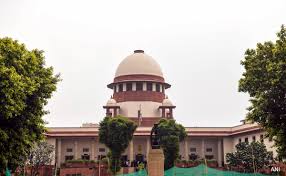
The Constitutional Fortress: Understanding the Removal of a High Court Judge in India
The Constitutional Fortress: Understanding the Removal of a High Court Judge in India
The independence of the judiciary is a cornerstone of any vibrant democracy, serving as the bedrock upon which the rule of law stands. In India, this independence is meticulously guarded by the Constitution, which insulates judges from political pressure and executive interference. However, this immunity is not absolute. To ensure accountability, the Constitution provides a rigorous mechanism for the removal of judges who compromise their office through misconduct or incapacity. This delicate balance between judicial independence and accountability has recently come into the national spotlight following the political developments surrounding the India Alliance’s resolution seeking the removal of Madras High Court Judge, Justice G.R. Swaminathan. This event has reignited public interest in the complex, seldom-used, and highly procedural machinery that governs the removal of a High Court judge.
The process of removing a judge in India is often colloquially referred to as "impeachment," borrowing terminology from the American constitutional framework. However, it is crucial to note that the Constitution of India does not use the word "impeachment" when referring to judges; it specifically employs the term "removal." This distinction is not merely semantic but legal, reflecting the specific constitutional architecture of India. The removal process is designed to be intentionally difficult, serving as a fortress that protects judges from frivolous political attacks while ensuring that genuine cases of gross misconduct can be addressed. It is a process where the legislative and judicial branches intersect, requiring a high degree of consensus and evidence to unseat a constitutional functionary.
The Grounds for Removal: Misbehavior and Incapacity
The Constitution of India is explicit about the grounds on which a High Court judge can be removed. Unlike political offices where removal might stem from a loss of confidence or policy disagreements, a judge’s tenure is protected against such vagaries. A High Court judge can be removed only on two specific grounds: "Proven Misbehavior" or "Proven Incapacity." These terms are legal terms of art, implying that vague allegations or mere unpopularity are insufficient to trigger the removal process. "Proven misbehavior" generally refers to conduct that is unbecoming of a judge, which could range from corruption and abuse of office to willful violation of constitutional oaths. "Proven incapacity," on the other hand, refers to a physical or mental inability to perform the duties of the office effectively.
The requirement that these grounds be "proven" is significant. It necessitates a formal inquiry and evidentiary support before the Parliament can even vote on the matter. This evidentiary burden prevents the removal mechanism from becoming a tool of political vendetta. The framers of the Constitution envisioned a judiciary that could rule without fear or favor, and by limiting the grounds of removal to these two specific categories, they ensured that judges would not be penalized for delivering judgments that might be unpopular with the ruling government or the public. The focus remains strictly on the integrity and capability of the individual holding the office, rather than the content of their judicial decisions.
Parliamentary Authority and Federal Structure
A unique feature of the Indian judicial system is the unified nature of the removal process. Despite High Courts being located in states, the power to remove a High Court judge does not lie with the State Legislature. It is the exclusive domain of the Parliament of India. This centralization of authority underscores the importance of the High Court as a constitutional court with a status that transcends state politics. If State Legislatures were empowered to remove High Court judges, it could lead to a scenario where local political pressures undermine the impartiality of the judiciary. By vesting this power solely in the Parliament, the Constitution ensures that the removal of a judge is treated as a matter of national importance, subject to the collective wisdom of the nation's highest legislative body.
Furthermore, the process for removing a High Court judge is identical to that of a Supreme Court judge. This equivalence highlights the parity in the constitutional protection enjoyed by judges of the higher judiciary. Whether a judge sits in the Madras High Court or the Supreme Court in New Delhi, their tenure is safeguarded by the same rigorous procedural firewall. This uniformity is essential for maintaining the dignity and independence of the High Courts, which are not subordinate to the Supreme Court in their judicial functioning but are independent constitutional entities. The exclusion of State Legislatures from this process acts as a check against federal friction, preserving the integrity of the judicial structure across the country.
The Procedural Labyrinth: Initiating the Motion
The journey to remove a judge is long and fraught with procedural hurdles, beginning with the initiation of the motion. A removal motion cannot be introduced by a single disgruntled Member of Parliament. It requires a significant show of collective will right from the start. To initiate the process, a motion must be signed by at least 100 members of the Lok Sabha or 50 members of the Rajya Sabha. This numeric threshold serves as a filter, ensuring that frivolous or politically motivated motions by individual members do not waste Parliament's time or damage the judiciary's reputation. It forces political parties to build a consensus and ensures that the motion has substantial backing before it even reaches the presiding officer.
Once the requisite signatures are gathered, the resolution is submitted to the presiding officer of the respective House, such as the Speaker in the case of the Lok Sabha or the Chairperson in the case of the Rajya Sabha. At this stage, the presiding officer plays a pivotal role. They possess the discretionary authority to either accept or reject the resolution. This power is absolute in the initial stage; the presiding officer is not legally obligated to provide reasoning if they choose to reject the motion. This discretion acts as a second filter, allowing the presiding officer to assess the prima facie merit of the allegations. However, this power has also been a subject of debate, as it places a significant check in the hands of a political appointee, potentially influencing the fate of the motion based on political considerations.
The Inquiry Committee: Fact-Finding Mission
If the presiding officer accepts the motion, the process moves from the political arena to a quasi-judicial one. The Speaker or Chairperson constitutes a three-member committee to investigate the charges. This step is governed by the Judges Inquiry Act, 1968, which lays down the statutory procedure for the investigation. The composition of this committee is strictly defined to ensure impartiality and expertise. It typically consists of a sitting judge of the Supreme Court, a Chief Justice of a High Court, and a distinguished jurist. This mix of judicial and legal expertise ensures that the inquiry is conducted with the rigor of a legal trial rather than a political witch-hunt.
The committee’s role is to conduct a thorough investigation into the allegations of misbehavior or incapacity. They examine witnesses, review documents, and provide the accused judge with an opportunity to defend themselves. This stage is critical because it transforms the accusations into "proven" findings. If the committee concludes that the judge is not guilty of the charges, the process ends there, and the motion is dropped. Parliament cannot proceed with the removal if the inquiry committee exonerates the judge. However, if the committee finds the judge guilty, the report is submitted to Parliament, and the motion is taken up for consideration. This ensures that the Parliament votes not just on allegations, but on established facts verified by a competent judicial body.
The Final Hurdle: Voting and Presidential Assent
The final and most difficult phase of the removal process is the voting in Parliament. For the motion to succeed, it must be passed by a "Special Majority" in both the Lok Sabha and the Rajya Sabha. This is not a simple majority where 51% of the votes suffice. The Constitution demands a dual threshold: first, an "Absolute Majority," which means more than 50% of the total strength of the House must vote in favor. Second, it requires a "Two-thirds Majority" of the members present and voting. This extremely high bar ensures that a removal motion cannot be passed merely by the ruling party using its numerical advantage. It requires broad bipartisan support, effectively meaning that the opposition and the government must agree on the necessity of removing the judge.
Once the motion is passed by both Houses of Parliament with the requisite special majority in the same session, it is presented to the President of India. The President then signs the order for the removal of the judge. This presidential assent is the final executive act that seals the process. The complexity and difficulty of this entire procedure are evident in the historical record: to date, no judge has been successfully removed in India. While there have been instances where proceedings were initiated, most notably against Justice V. Ramaswami and Justice Soumitra Sen, they either resigned before the final vote or the motion failed to garner the necessary political support in Parliament. This history serves as a testament to the rigorous design of the removal mechanism.
Conclusion
The removal of a High Court judge in India is a process characterized by its formidable complexity and high procedural safeguards. From the requirement of substantial legislative support to initiate the motion, to the mandatory judicial inquiry, and finally the need for a special majority in Parliament, every step is designed to protect the independence of the judiciary. While the recent move against Justice G.R. Swaminathan has brought these provisions back into public discourse, the constitutional framework ensures that removal remains a rare and solemn remedy, reserved for the gravest of infractions. It balances the need for judicial accountability with the imperative of protecting judges from political interference, maintaining the delicate equilibrium necessary for a functioning democracy. The fact that no judge has ever been removed is not a sign of the system's failure, but rather an indication of the high threshold the Constitution sets for safeguarding the custodians of justice.