The Evolution of BRICS+: Redefining the Global Geopolitical Landscape
The Evolution of BRICS+: Redefining the Global Geopolitical Landscape
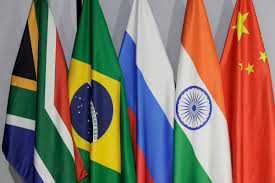
The year 2026 marks a watershed moment in international relations as the BRICS alliance formally transitions into BRICS+. What began as a financial acronym to identify emerging markets has evolved into a formidable geopolitical bloc. The original quintet: Brazil, Russia, India, China, and South Africa has strategically expanded its borders to include Egypt, Ethiopia, Iran, the United Arab Emirates (UAE), Saudi Arabia, and Indonesia. This expansion is not merely numerical; it represents a tectonic shift in the global balance of power, effectively spanning the most critical energy corridors and trade routes of the Middle East, Africa, and Southeast Asia. By integrating these diverse economies, BRICS+ now stands as a primary challenger to the Western-centric global order, signaling the definitive end of unipolarity and the rise of a more representative international system.
Navigating Internal Contradictions and Rivalries
While the expansion of BRICS+ significantly bolsters its collective influence, it simultaneously introduces internal frictions that could hamper cohesive decision-making. The inclusion of nations with deep-seated historical and regional rivalries most notably the complex triad of Iran, Saudi Arabia, and the UAE, introduces a layer of tension into a bloc that operates on the principle of consensus. Achieving a unified stance on sensitive matters of international security or diplomatic policy becomes exponentially more difficult when member states are on opposite sides of regional proxy conflicts. For the bloc to remain effective, it must develop sophisticated internal mediation mechanisms that prevent localized animosities from paralyzing the group’s broader global agenda.
The Economic Paradox: Exporters vs. Importers
One of the most significant hurdles for the newly expanded bloc is the inherent divergence in economic priorities among its members. BRICS+ has essentially become an "Energy Powerhouse," yet it is internally conflicted. The bloc now houses some of the world’s largest oil and gas exporters like Russia, Saudi Arabia, Iran, and the UAE, alongside some of the world’s most energy-hungry importers, such as India, China, and Ethiopia. This creates a natural tension regarding global energy pricing and supply stability. While exporters benefit from high crude prices to fuel their domestic budgets, the importers seek lower costs to drive industrial growth and curb inflation. Balancing these "petrodollar" interests with the developmental needs of oil-importing members remains a critical challenge for the group’s economic planners.
Geopolitical Alignments and the Western Relationship
The member states of BRICS+ do not share a monolithic view of the West. This ideological heterogeneity is a defining characteristic of the 2026 landscape. While Russia and Iran may view the bloc as an explicit "anti-West" vehicle to bypass sanctions, other key players like India and the UAE maintain robust strategic partnerships with the United States and the European Union. These "multi-aligned" nations view BRICS+ not as a replacement for Western ties, but as a necessary diversification of their diplomatic portfolio. This creates a "patchwork" of foreign policies where the bloc must navigate between confrontational rhetoric and pragmatic cooperation, ensuring that the alliance does not devolve into a "New Cold War" instrument that forces members to choose sides.
The Pre-eminent Voice of the Global South
Despite its internal challenges, BRICS+ has solidified its position as the ultimate platform for the Global South. For decades, developing nations have argued that the post-WWII international architecture, specifically the G7, IMF, and World Bank disproportionately favors the Global North. BRICS+ provides a collective megaphone for these nations to demand a more equitable distribution of power in global governance. By representing nearly half of the world's population, the bloc commands a moral and demographic authority that is increasingly difficult for Western institutions to ignore. It serves as a forum where issues like climate finance, technology transfer, and sovereign debt are discussed from the perspective of the developing world rather than through a Western lens.
De-dollarization and the New Frontier of Trade
A core pillar of the BRICS+ strategy is the aggressive promotion of Local Currency Trade. To shield themselves from the reach of unilateral Western sanctions and the volatility of the U.S. Dollar, member states are increasingly settling bilateral trades in their own currencies, such as the Rupee, Yuan, or Dirham. This move toward "financial sovereignty" is not just about economics; it is a strategic defense mechanism. By building alternative payment systems and reducing reliance on the SWIFT network, BRICS+ is creating a parallel financial universe. While a unified "BRICS Currency" remains a long-term and complex goal, the immediate shift toward local currency settlements is already reducing the "exorbitant privilege" of the dollar in global trade.
Institutional Alternatives: The New Development Bank (NDB)
The New Development Bank (NDB), headquartered in Shanghai, stands as the most tangible success of the BRICS framework. Unlike the World Bank or the IMF, which often attach stringent political or economic conditionalities to their loans, the NDB offers a "no-strings-attached" approach to infrastructure financing. This is particularly attractive to emerging economies in Africa and Southeast Asia that require rapid mobilization of capital for green energy, transport, and digital infrastructure without the burden of intrusive domestic policy interference. As more nations join BRICS+, the NDB’s capital base and lending capacity are expected to grow, providing a crucial safety net and investment engine that operates independently of Western financial dictates.
Strategic Autonomy in a Multi-polar World
For a country like India, participation in BRICS+ is a masterstroke of strategic autonomy. It allows New Delhi to sit at a table with its largest neighbor, China, and its historical ally, Russia, while simultaneously engaging with the West via the Quad or G20. This "multi-vector" diplomacy ensures that no single superpower can dictate India’s national interests. In the broader sense, BRICS+ ensures that the world remains multi-polar. By providing a counterweight to the G7, the bloc prevents the re-emergence of a bipolar world, instead fostering a landscape where regional powers have the leverage to negotiate better terms for their citizens and their economies.
BRICS+ vs. G7: A Comparative Glance
|
Feature |
BRICS+ (The Emerging Order) |
G7 (The Established Order) |
|
Demographic Weight |
~45% of World Total |
~10% of World Total |
|
Economic Power (PPP) |
~37% (Currently surpassing G7) |
~30% |
|
Resource Sovereignty |
Controls ~80% of Global Oil Reserves |
Primarily Resource Consumers |
|
Political Ideology |
Diverse (Monarchies, Democracies, etc.) |
Homogeneous (Liberal Democracies) |
|
Primary Objective |
Reform of Global Governance |
Maintenance of Rules-Based Order |
Conclusion: An Indispensable Pillar of the 21st Century
The transition from BRICS to BRICS+ is far more than a simple expansion; it is a "coming of age" for the non-Western world. While the path ahead is undoubtedly cluttered with internal rivalries, economic paradoxes, and the difficult task of consensus-building, the collective weight of the bloc is now undeniable. With its vast human capital, control over the world’s primary energy reserves, and the creation of alternative financial institutions, BRICS+ has become an indispensable pillar of the new international system. It ensures that the future of global governance will be written by a broader set of authors, reflecting a world that is no longer dominated by a single hemisphere, but is truly global in its representation and reach.