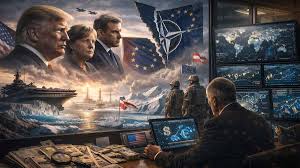
The Great Decoupling: Navigating the 2026 Transatlantic Alliance Rift
The Great Decoupling: Navigating the 2026 Transatlantic Alliance Rift
The geopolitical landscape of 2026 has been defined by a seismic shift in one of history’s most enduring partnerships. The Transatlantic Alliance, which served as the bedrock of global stability for over eight decades, is currently navigating a period of profound fragmentation. Under the Trump 2.0 administration, the traditional ties of shared democratic values and mutual security have been replaced by a "Western Hemisphere First" doctrine. This transition has steered the relationship into a highly transactional and increasingly adversarial "low-trust" environment. For European leaders, the realization that the American security umbrella is no longer a historical certainty has triggered a desperate, accelerated march toward self-reliance.
The Greenland Crisis and the Nadir of Diplomacy
The early weeks of 2026 saw the emergence of the "Greenland Crisis," a geopolitical flashpoint that underscored the new administration's aggressive unilateralism. By renewing pressure on Denmark to cede or sell control of the Arctic territory, the U.S. signaled a departure from traditional diplomatic norms. When Copenhagen, backed by a unified European front including Germany, France, and the UK, rejected these overtures, the response from Washington was swift and economic. The threat of punitive tariffs against Danish exports and broader European industries pushed the relationship to its lowest point in the post-war era. This incident served as a wake-up call, proving that even the most sovereign European interests could become bargaining chips in the new American transactional strategy.
The NATO Ultimatum and the End of Collective Security
Perhaps the most significant strain on the alliance is the radical shift in the American approach to NATO. Moving far beyond the 2014 Wales Summit agreement where allies committed to spending 2% of their GDP on defense, the current U.S. administration has floated a staggering 5% target. This ultimatum is accompanied by rhetoric that characterizes European allies as "freeriders" and openly questions the sanctity of Article 5, the collective defense clause that forms the heart of the treaty. By framing security as a pay-to-play service rather than a mutual commitment, the U.S. has forced Europe to confront a reality where its eastern flank, particularly those nations bordering a resurgent Russia, may eventually have to stand alone.
Economic Warfare and the Rise of Trade Barriers
Trade has shifted from a pillar of cooperation to a primary theater of conflict. In early 2026, the U.S. implemented a 15% across-the-board tariff on most European Union imports and a 10% tariff on goods from the United Kingdom. These measures, enacted with little regard for World Trade Organization (WTO) guidelines or existing bilateral treaties, have disrupted global supply chains and ignited fears of a prolonged trade war. The American focus on protectionism and "re-shoring" industries has directly collided with Europe’s integrated export-led economies. This economic fragmentation is creating two distinct, competing Western blocs, further diluting the collective bargaining power the West once held on the global stage.
Diverging Paths: Climate, Ukraine, and Global Governance
The rift is deepened by a fundamental divergence in policy across critical global issues. On climate change, the U.S. has abandoned the Paris Agreement goals in favor of heavy domestic drilling and fossil fuel expansion, while Europe doubles down on its green industrial transition. In the theater of war, the U.S. has sharply reduced military aid to Ukraine, advocating for a "deal" that many European capitals fear would reward Russian aggression. Furthermore, the U.S. withdrawal from over 60 international organizations and UN entities has created a vacuum in multilateral governance. This "Donroe Doctrine", a blend of isolationism and regional dominance, prioritizes American control over the Western Hemisphere while leaving the rest of the world to navigate a leaderless international order.
The Ideological Battlefront
Beyond policy and trade, an ideological war is simmering. High-ranking U.S. officials have become increasingly vocal in their criticism of European regulatory frameworks, social safety nets, and cultural values. There has been an observable trend of Washington offering political "moral support" to far-right, euroskeptic parties across the continent, further straining the domestic stability of EU member states. This interference in internal European politics has eroded the "shared values" narrative that once bound the two continents, replacing it with a sense of mutual suspicion. Europe now views the U.S. not just as a distancing ally, but as a potential disruptor of its internal democratic cohesion.
The Path to Strategic Autonomy: Europe’s Readiness 2030
In response to this isolation, the concept of "Strategic Autonomy" has moved from a French academic theory to an urgent pan-European necessity. The "Readiness 2030" initiative represents Europe's blueprint for a post-American security architecture. This involves a massive investment in independent military capabilities, including advanced satellite intelligence, heavy-lift transport, and integrated command-and-control systems that do not rely on U.S. infrastructure. Additionally, European leaders are exploring legislative "backstops" to allow nations like Poland and Romania to deploy air defenses over Ukrainian territory independently, ensuring that European security decisions are made in Brussels and Paris rather than being dictated by a disinterested Washington.
Forging New Frontiers and Diversified Partnerships
Recognizing that it can no longer rely on the American consumer market, Europe is pivoting toward a more diversified economic future. The signing of the EU-Mercosur Free Trade Agreement in early 2026 is a testament to this shift, as the EU seeks to deepen ties with Latin American markets. Simultaneously, Europe is strengthening its "Middle Power" alliances with nations like Japan, South Korea, and Australia to preserve the rules-based international order. By building these horizontal partnerships, Europe aims to insulate its economy from the volatility of U.S. trade policy and ensure it remains a significant global actor in a multipolar world.
Conclusion: A New Era of Self-Reliance
The Transatlantic Alliance is undergoing its most profound transformation since 1945. The "age of subservience," characterized by Europe’s reliance on American military and economic might, has effectively ended. While the U.S. will always remain a critical global actor and an essential trade partner, the partnership has entered a "low-trust" reality where friction is the default setting. For Europe, the challenge of 2026 and beyond is to transform this crisis into an opportunity for genuine sovereignty. The survival of the European project now depends on its ability to build a robust, self-reliant defense and an economic model that can withstand the tides of American unilateralism.