The Legal Shield of Necessity: Force Majeure in a Volatile Global Economy
The Legal Shield of Necessity: Force Majeure in a Volatile Global Economy
The concept of contractual stability has long been the bedrock of international trade and domestic commerce. However, as the world enters the mid-2020s, the predictability of global markets is increasingly being challenged by a convergence of geopolitical friction and environmental instability. In early 2026, this fragility reached a breaking point when major energy exporters in the Gulf region, including Qatar, Kuwait, and Bahrain, officially declared Force Majeure on several long-term oil and gas supply agreements. Triggered by the sharp escalation of the Iran-Israel conflict, these declarations did more than just pause energy shipments; they reignited a global legal and economic debate on the limits of contractual obligation and the definition of an "unforeseeable" disaster.
The Linguistic and Legal Origins of "Superior Force"
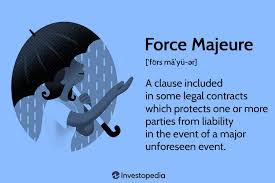
At its core, Force Majeure is a French term that translates literally to "superior force." In the realm of jurisprudence, it serves as a critical safeguard, a legal clause embedded within contracts to shield parties from liability when extraordinary, uncontrollable events make the fulfillment of their duties impossible. Unlike common law doctrines that might be implied by a court, a Force Majeure clause is typically a product of specific negotiation. It acknowledges a fundamental truth of the human condition: that despite our most sophisticated systems of planning and logistics, there remain "Acts of God" and cataclysmic human events that can render even the most earnest promises unfulfillable.
The Three Pillars of Invocation: When the Shield Applies
For a company or a nation to successfully invoke Force Majeure, the event in question must meet a stringent three-tiered threshold. The first pillar is Externality. The cause of the disruption must originate from an outside source; a strike by a company’s own employees due to poor management would likely not qualify, whereas a regional war certainly would. The second pillar is Unforeseeability. The event must be of such a nature that it could not have been reasonably anticipated at the moment the contract was signed. In the current context of 2026, while tensions in the Middle East are persistent, the specific intensity and scale of the Iran-Israel conflict provided the "extraordinary" character required for legal relief.
The third and perhaps most vital pillar is Irresistibility. Even if an event is external and unforeseen, the party seeking relief must prove that the consequences were unavoidable. If a supplier could have reasonably used an alternative shipping route, even at a higher cost, the plea of Force Majeure might fail. The performance must be rendered physically or legally impossible, not merely more expensive or inconvenient. This distinction is the thin line that prevents the clause from becoming a convenient exit strategy for parties facing a "bad bargain."
Nature vs. Humanity: Categorizing Disruptive Events
The triggers for Force Majeure are generally categorized into natural and anthropogenic events. Natural triggers, often referred to as "Acts of God," include earthquakes, floods, tsunamis, and volcanic eruptions. The COVID-19 pandemic served as a modern masterclass in natural Force Majeure, as governments worldwide shuttered borders and halted manufacturing, making contractual performance impossible across nearly every sector. On the other hand, anthropogenic or "human-made" events involve political and social upheavals. This includes full-scale wars, localized riots, nationwide strikes, or sudden, drastic changes in government policy, such as an export ban or the imposition of economic sanctions that legally bar a party from fulfilling its end of an agreement.
The Doctrine of Frustration and Global Legal Frameworks
The application of Force Majeure varies significantly across different legal jurisdictions. In civil law systems, the concept is often ingrained in the national code. However, in common law jurisdictions like India, the legal framework relies heavily on the Indian Contract Act of 1872. Specifically, Section 56 outlines the "Doctrine of Frustration," which dictates that a contract becomes void if an act becomes impossible to perform after the contract is made. While Force Majeure is a specific contractual clause, the Doctrine of Frustration acts as a statutory safety net for cases where no such clause exists. However, relying on the doctrine is often riskier and more complex than invoking a well-drafted Force Majeure provision, as the "burden of proof" remains exceptionally high. The invoking party must demonstrate that they took every reasonable measure to mitigate the event’s impact before declaring total non-performance.
Modern Challenges: Interpretation and Economic Reality
One of the most significant hurdles in modern international law is the ambiguity of contract language. Many older agreements use vague "catch-all" phrases like "any other causes beyond the party's control." Such wording frequently leads to years of litigation as courts struggle to determine if a specific event, such as a localized cyber-attack or a minor border skirmish, truly qualifies as a "superior force." Furthermore, the judiciary has remained firm on the "Economic Hardship" rule: a mere increase in the price of raw materials or a fluctuation in currency value does not constitute Force Majeure. The law expects businesses to absorb market risks; it only offers protection when the very mechanism of trade is broken.
The 2026 Gulf energy crisis highlights another challenge: the Chain Reaction or "Domino Effect." When a primary supplier of liquified natural gas (LNG) invokes Force Majeure, the impact cascades down the global supply chain. A manufacturing plant in South Asia might then be forced to shut down due to lack of fuel, leading them to invoke Force Majeure against their own retail clients. This creates a "patchwork" of legal disputes that can take decades to resolve, often leaving smaller enterprises at the mercy of larger corporations with more robust legal departments.
Strategic Evolution: The Way Forward for International Trade
As we look toward the future of global commerce, the "Way Forward" involves a shift from reactive litigation to proactive drafting. Future international trade agreements are expected to feature far more granular Force Majeure clauses that specifically address 21st-century risks, such as regional drone warfare, state-sponsored cyber-attacks, and climate-induced sea-level rises. Legal experts are increasingly advocating for Alternative Dispute Resolution (ADR) mechanisms, such as fast-track mediation and arbitration, to settle these claims without clogging national court systems for years.
On a state level, the recent energy disruptions emphasize the necessity of Diversification. Energy-importing nations can no longer afford to rely on a single geographic corridor. Investing in a mix of renewable energy, nuclear power, and multi-regional supply agreements is no longer just an environmental goal; it is a legal and economic strategy to mitigate the impact of Force Majeure events in volatile regions.
Conclusion: The Delicate Balance of Global Equity
Force Majeure remains a vital "legal escape valve" in an increasingly chaotic world. It ensures that the law does not demand the impossible and that parties are not destroyed by events that no human could have stopped. Yet, its frequent invocation in 2026 serves as a somber reminder of the fragility of our interconnected systems. As the line between "unforeseeable" and "inevitable" continues to blur in an era of climate change and geopolitical shifts, the legal community must strive to balance the sanctity of contracts with the undeniable reality of a changing planet. Ultimately, the strength of a global economy lies not just in the promises we make, but in how we fairly manage the moments when those promises are broken by forces beyond our control.