The New Dawn of Indo-Israeli Relations: Analyzing PM Modi’s 2026 State Visit
The New Dawn of Indo-Israeli Relations: Analyzing PM Modi’s 2026 State Visit
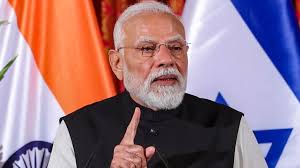
On February 25–26, 2026, Prime Minister Narendra Modi undertook a historic two-day State Visit to Israel, marking his second official journey to the Holy Land since his groundbreaking 2017 visit. While the first visit was about bringing a "closet" relationship into the open, the 2026 visit occurred against the backdrop of a radically altered geopolitical landscape in West Asia. Following the seismic events of October 7, 2023, and the subsequent regional shifts, this visit was designed to reinforce the India-Israel Strategic Partnership as a pillar of stability. By choosing this moment to visit, New Delhi signaled that its ties with Jerusalem are not merely transactional but are rooted in long-term strategic convergence, shared democratic values, and a mutual interest in a stable, multi-polar world.
A Historic Address: Solidarity and the Vision for Peace at the Knesset
Prime Minister Modi achieved a significant diplomatic milestone by becoming the first Indian Prime Minister to address the Knesset, Israel's Parliament. His speech was a masterclass in balancing firm moral clarity with diplomatic nuance. Addressing a captivated house, he condemned the "barbaric" terror attacks of October 7 in no uncertain terms, reiterating India’s unwavering policy of "zero tolerance for terrorism." By drawing a direct parallel between the trauma of the 2008 Mumbai attacks (26/11) and Israel’s recent experiences, he underscored that terrorism is a global menace requiring a global response without double standards.
However, the address was not solely focused on security. In a move that displayed India’s role as a "Vishwa Mitra" (friend to the world), PM Modi officially endorsed the UN-backed Gaza Peace Initiative. He emphasized that while Israel has an inherent right to protect its citizens, the path to a "just and durable peace" must eventually be paved through dialogue and the preservation of human dignity. This balanced rhetoric served to remind the international community that India remains a champion of stability in West Asia, advocating for a resolution that ensures security for Israel and a viable future for the Palestinian people.
The "Iron Alliance": Scaling Strategic and Economic Cooperation
During the visit, Israeli Prime Minister Benjamin Netanyahu characterized the relationship as an "enormous multiplier" and an "iron alliance" between two resilient democracies. This was not mere hyperbole; the bilateral talks led to the fast-tracking of a comprehensive Free Trade Agreement (FTA). Both nations recognized that despite their strong defense ties, the commercial potential remains largely untapped. The proposed FTA is expected to catalyze trade in high-tech manufacturing, services, and pharmaceuticals, providing Indian businesses a gateway to Mediterranean markets and Israeli firms access to India’s massive consumer base.
The cooperation extended deeply into the realm of "future-tech." Both leaders visited a specialized innovation exhibition in Jerusalem, highlighting several key sectors:
- AI and Quantum Computing: Establishing joint research labs to ensure both nations lead in the next industrial revolution.
- Water and Agri-Tech: Utilizing Israeli innovations like atmospheric water generators (WaterGen) and micro-irrigation (N-Drip) to solve India’s water security challenges.
- Cybersecurity: Creating a "Digital Iron Dome" through shared intelligence and advanced threat-prevention technologies to protect critical infrastructure.
The Hexagonal Alliance: Navigating a New Geopolitical Architecture
One of the most discussed developments of the visit was Prime Minister Netanyahu’s proposal for a "Hexagon of Alliances." This new geopolitical architecture seeks to bring together six key players Israel, India, Greece, Cyprus, and select Arab and African nations, into a cohesive security and strategic axis. The primary objective of this proposed bloc is to provide a counter-balance to "radical axes" in the region, focusing on maritime security, counter-terrorism, and energy stability.
For India, the proposal represents both a massive opportunity and a diplomatic challenge. While New Delhi is a "core partner" in this vision, it must perform a delicate balancing act. India maintains vital energy, economic, and civilizational ties with nations like Iran, Saudi Arabia, and Qatar. To preserve its "Strategic Autonomy," India has indicated that its participation in such frameworks will remain focused on issue-based cooperation such as the I2U2+ initiative rather than joining a rigid, military-style bloc. This approach ensures that India can benefit from the security architecture of the Mediterranean without alienating its traditional partners in the Persian Gulf.
IMEC: Reviving the Gateway to the West
The visit breathed new life into the India-Middle East-Europe Economic Corridor (IMEC), which had faced delays due to regional instability. Netanyahu described India and Israel as the "secure anchors" of this project, which aims to link India to Europe via a network of ship-to-rail transit involving the UAE, Saudi Arabia, Jordan, and Israel (specifically the Haifa Port).
Despite the hurdles, several factors have converged to make IMEC more relevant in 2026. The signing of the India-EU Trade Deal earlier in the year and the successful 2025 Trieste Summit have positioned IMEC as a "future-proof" alternative to traditional maritime routes. By bypassing chokepoints and offering a faster logistical chain, IMEC is set to become the backbone of trade between the Indo-Pacific and the Mediterranean. The operationalization of the Haifa Port, managed by Indian expertise (Adani Group), serves as a critical nodal point for this vision.
The Art of De-hyphenation: Diplomacy and Cultural Connect
A hallmark of PM Modi’s foreign policy has been "de-hyphenation", the ability to build an independent relationship with Israel while maintaining a separate, principled stand on Palestine. During this visit, India successfully reaffirmed its defense ties with Jerusalem while explicitly supporting a Two-State Solution and committing to Palestinian humanitarian aid. This sophisticated maneuvering has allowed India to gain the trust of both sides, positioning it as a unique mediator in a deeply divided region.
The visit also possessed a profound cultural and emotional dimension. PM Modi’s visit to Yad Vashem, the World Holocaust Remembrance Center, was a poignant moment of reflection on shared history. Furthermore, his interaction with the Indian-Jewish diaspora (from the Bene Israelis to the Cochin Jews) highlighted the "blood and sacrifice" ties between the two nations. These communities serve as a "living bridge," ensuring that the strategic partnership is supported by a strong foundation of people-to-people connections.
Conclusion: A Multifaceted Alliance for a Volatile Era
The 2026 State Visit has effectively cemented the transition of India-Israel relations from a "quiet" defense-centric partnership to a public, multifaceted strategic alliance. By positioning India at the heart of the "Hexagon" and the IMEC corridor, both nations are looking to build a stable, technology-driven corridor of prosperity. As the world navigates an era of intense volatility, the synergy between India's scale and Israel's innovation offers a blueprint for a new kind of partnership, one that prizes security, values democracy, and seeks to turn a "crisis-ridden" region into a hub of global connectivity. This visit confirms that the "Iron Alliance" is a forward-looking commitment to the challenges and opportunities of the next decade.