The Olive Ridley Sentinel: Navigating Mass Nesting and Climate Shifts
The Olive Ridley Sentinel: Navigating Mass Nesting and Climate Shifts
The Olive Ridley sea turtle (Lepidochelys olivacea) stands as one of nature’s most resilient yet fragile travelers. Named for the olive-green hue of its heart-shaped shell, this species is the most abundant of all sea turtles found in the world. However, its vast numbers mask a precarious existence dictated by specific environmental cues and ancient biological rhythms. In India, the Olive Ridley is more than just a marine inhabitant; it is a cultural and ecological icon, particularly along the eastern coastline. As we navigate the complexities of marine conservation in 2026, the story of the Olive Ridley serves as a primary case study for how global environmental changes, specifically rising temperatures, threaten to outpace millions of years of evolutionary adaptation.
The Phenomenon of Arribada: Nature’s Grandest Spectacle
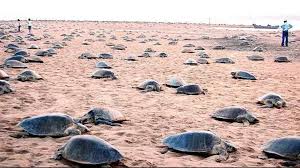
The most defining characteristic of the Olive Ridley is the "Arribada," a Spanish term meaning "arrival." This unique mass nesting phenomenon involves thousands, and sometimes hundreds of thousands, of female turtles congregating in the offshore waters before simultaneously storming the beaches to lay their eggs. Unlike other sea turtle species that nest individually and sporadically, the Olive Ridley’s synchronized approach is a strategic survival mechanism known as "predator swamping." By emerging in such overwhelming numbers, they saturate the environment with potential prey, ensuring that even if local predators such as stray dogs, jackals, and birds consume many eggs or hatchlings, a significant percentage will still survive to reach the ocean.
Gahirmatha and the Guardians of the Odisha Coast
India’s eastern state of Odisha hosts the world’s largest known nesting ground for these turtles. Gahirmatha Beach, protected under the Gahirmatha Marine Sanctuary, is the primary theater for the Arribada. Every year, between January and March, the coastline transforms into a mosaic of flippers and sand as the turtles return to the very beaches where they were born. While Gahirmatha is the most famous, other critical sites include the mouths of the Rushikulya and Devi rivers. Beyond Odisha, significant nesting activities have been documented along the coasts of Tamil Nadu, Andhra Pradesh, and the Andaman and Nicobar Islands. These regions form a vital corridor for the Indo-Pacific population, making India a global stakeholder in the species' survival.
Vulnerability and the IUCN Red List Status
Despite the sheer volume of turtles seen during an Arribada, the Olive Ridley is classified as Vulnerable on the IUCN Red List. This status reflects a global population that has seen a significant decline in its nesting colonies over the last few decades. The species faces a "death by a thousand cuts", from accidental entanglement in fishing nets (bycatch) to the loss of nesting habitats due to coastal development and lighting pollution. In India, the turtles are protected under Schedule I of the Wildlife Protection Act, 1972, granting them the highest level of legal protection, equivalent to that of the Bengal Tiger. However, legal status alone cannot shield them from the burgeoning threat of the climate crisis.
Temperature-Dependent Sex Determination (TSD)
One of the most fascinating, yet currently dangerous, aspects of Olive Ridley biology is that the sex of the hatchlings is not determined by chromosomes, but by the temperature of the sand in which the eggs are incubated. This is known as Temperature-Dependent Sex Determination (TSD). Generally, cooler incubation temperatures (below 28°C) produce male hatchlings, while warmer temperatures (above 31°C) produce females. There is a "pivotal temperature" usually around 29°C to 30°C, at which an equal number of males and females are born. Even a slight shift in this thermal balance can have catastrophic consequences for the demographic future of the species.
The "Feminization" Threat: Climate Change and Population Stability
As global temperatures continue to rise, the sand on Indian nesting beaches is becoming increasingly hot. This environmental heating is leading to a phenomenon known as "feminization," where an overwhelming majority of hatchlings are born female. Recent studies in 2025 and 2026 have indicated that in some nesting clusters, the ratio of female to male hatchlings has skewed as high as 90:1. While a female-biased population might seem beneficial for egg production in the short term, the long-term lack of male genetic diversity and the eventual inability of females to find mates could lead to a population collapse. If the sand stays consistently above the lethal limit (typically 33°C to 34°C), it could result in total nest failure, where eggs essentially "cook" before they can hatch.
Human-Induced Challenges and Coastal Infrastructure
Beyond the climate, human activity continues to reshape the Olive Ridley’s world. Coastal illumination is a primary concern; hatchlings use the reflection of the moon and stars on the ocean to find their way to the water. Bright artificial lights from resorts, highways, and ports disorient the young turtles, leading them toward land where they die of dehydration or are killed by vehicles. Furthermore, the use of mechanized fishing trawlers without Turtle Excluder Devices (TEDs) remains a major cause of adult mortality. Thousands of turtles drown every year after being trapped in nets, unable to surface for air. While the Indian Coast Guard’s "Operation Olivia" helps monitor these waters, enforcement remains a gargantuan task given the length of the coastline.
The Way Forward: Conservation Strategies for a Warming World
Protecting the Olive Ridley in 2026 and beyond requires a shift from traditional "protection" to active "intervention." To combat the effects of TSD, conservationists are experimenting with innovative local solutions:
- Shaded Hatcheries: Using natural materials like thatch to shade nesting pens, effectively lowering the sand temperature to ensure a healthy mix of male and female hatchlings.
- Community-Led Monitoring: Empowering local fishing communities to act as "Sea Turtle Guards" has proven more effective than top-down policing, especially in protecting nests from feral dogs.
- Technological Integration: Utilizing satellite tagging to track migratory routes and AI-powered drones to monitor nesting beaches without disturbing the turtles during the sensitive Arribada.
- Policy Reform: Mandatory installation of TEDs in all commercial trawlers and the implementation of "dark sky" policies in coastal zones during nesting months to prevent hatchling disorientation.
Conclusion
The Olive Ridley turtle is a mirror reflecting the health of our oceans. Their ancient ritual of the Arribada reminds us of the planet's enduring beauty, but their struggle with rising temperatures warns us of a fragile future. Safeguarding these sentinels requires a global commitment to carbon reduction and local dedication to habitat preservation. As the sun sets over the dunes of Gahirmatha, the sight of thousands of tiny hatchlings scuttling toward the surf remains a symbol of hope, a hope that with the right balance of science and empathy, we can ensure these ancient voyagers continue their journey for millions of years to come.