The Radiant Bridge: Decoding the India-Canada Strategic Uranium Deal of 2026
The Radiant Bridge: Decoding the India-Canada Strategic Uranium Deal of 2026
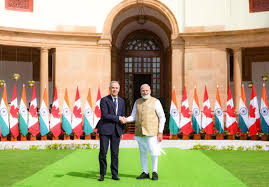
The geopolitical landscape of 2026 has witnessed a transformative shift in the Indo-Pacific corridor, marked by a decisive "reset" in the diplomatic and economic architecture between New Delhi and Ottawa. In March 2026, the official visit of Canadian Prime Minister Mark Carney to India culminated in the signing of a landmark $2.6 billion long-term uranium supply agreement. This deal is not merely a commercial exchange of mineral wealth; it represents a sophisticated pivot from years of diplomatic frost toward a robust, high-stakes energy partnership. By securing a steady flow of nuclear fuel, India has fortified its energy security, while Canada has re-established itself as a foundational pillar in India’s quest for a carbon-neutral future.
The Scope and Scale of the 2026 Agreement
At the heart of this bilateral breakthrough is a contract between the Canadian uranium titan, Cameco, and India’s Department of Atomic Energy (DAE). Under the terms of the agreement, Cameco will supply approximately 22 million pounds of uranium ore concentrate ($U_3O_8$) to India. This massive volume is designed to sustain India’s growing fleet of nuclear reactors, ensuring that the country’s high-tech energy infrastructure remains operational without the looming threat of fuel shortages.
The timeline for this partnership is equally ambitious. Deliveries are slated to commence in 2027 and extend through 2035, covering a critical nine-year window during which India plans to commission several new nuclear power plants. By locking in a decade-long supply from one of the world's most reliable producers, India mitigates the volatility of the global spot market. For Canada, the deal reinforces its standing as a "supplier of choice," leveraging its vast reserves in the Athabasca Basin to fuel the clean energy transition of one of the world’s fastest-growing economies.
Addressing the Domestic Supply-Demand Chasm
India’s appetite for energy is growing at an unprecedented rate, yet its domestic uranium production has historically struggled to keep pace. Currently, India requires roughly 1,800 tonnes of uranium every year to power its existing nuclear reactors. However, domestic output, primarily from mines in Jharkhand and Andhra Pradesh hovers between 600 and 900 tonnes. This glaring deficit has often forced Indian reactors to operate at sub-optimal capacities.
While India possesses geological reserves estimated at 76,000 tonnes, extracting this ore is a slow, capital-intensive process often hampered by environmental and regulatory hurdles. The Canada deal effectively bridges this chasm. By securing foreign uranium, India can maintain "baseload" power, the consistent, reliable electricity flow that solar and wind struggle to provide during nighttime or calm weather. This is a critical step in reducing India's staggering dependence on imported crude oil, which currently satisfies nearly 80% of the nation's oil requirements.
Nuclear Energy as the Catalyst for 'Viksit Bharat 2047'
The 2026 uranium deal is a primary engine for the Indian government’s "Viksit Bharat 2047" vision, which seeks to transform India into a developed nation by the centenary of its independence. A cornerstone of this vision is the radical expansion of nuclear capacity. As of early 2026, India’s nuclear capacity stands at a modest 8.78 GW, but the target for 2047 is a staggering 100 GW.
To reach this target, the Indian government has launched a dedicated Nuclear Energy Mission, backed by significant fiscal allocations in the 2025-26 Union Budget. This includes a specialized ₹20,000 crore fund for the development and deployment of Small Modular Reactors (SMRs). Unlike traditional large-scale plants, SMRs are easier to build, safer to operate, and can be situated closer to industrial clusters. The Canadian uranium will fuel a diversified portfolio of reactors, including indigenous Pressurized Heavy Water Reactors (PHWRs) and high-capacity Light Water Reactors (LWRs) built in collaboration with international partners.
From Friction to Fusion: A Diplomatic Reset
The journey to this agreement was not without its hurdles. Recent years saw bilateral ties strained by complex internal security concerns and diplomatic disagreements. However, the Carney-Modi summit signaled a pragmatic realization: the economic and environmental costs of estrangement were too high. The 2026 deal serves as a "strategic stabilizer," anchoring the relationship in shared economic interests that transcend political cycles.
This reset is also part of India’s broader strategy to diversify its fuel sources. While Kazakhstan remains India’s largest uranium supplier, the partnership with Canada provides a crucial secondary geostrategic pillar. For Canada, the deal is a central component of its Indo-Pacific Strategy, which aims to deepen ties with democratic partners in Asia to balance regional trade dynamics. The uranium deal has effectively turned the page, moving the conversation from past grievances to future-oriented energy security.
Beyond Uranium: The CEPA and Critical Minerals Roadmap
The uranium deal acted as a catalyst for a broader suite of "next-generation" agreements during the 2026 summit. Most notably, the two nations signed the Terms of Reference for a Comprehensive Economic Partnership Agreement (CEPA). Negotiators are working on a fast-track timeline to conclude this free-trade agreement by the end of 2026, with the ambitious goal of expanding bilateral trade to $50 billion by 2030.
Furthermore, the partnership has expanded into the "new energy" sector. A Memorandum of Understanding (MoU) on Critical Minerals was established to secure supply chains for lithium, cobalt, and copper elements vital for India’s burgeoning Electric Vehicle (EV) industry. Canada, with its vast mineral wealth, and India, with its massive manufacturing aspirations, are natural partners in the global race to dominate the green technology sector.
Climate Leadership: Joining ISA and Global Biofuels Alliances
Canada’s commitment to the Indian energy landscape was further cemented by its decision to join the International Solar Alliance (ISA) and the Global Biofuels Alliance (GBA) as a full member. This move signifies Canada’s recognition of India’s leadership in global climate diplomacy. By joining these alliances, Canada will share expertise in biofuel technology and solar grid management, while India gains access to Canadian research and development in clean tech.
This alignment also extends to the social sector. New agreements were reached to facilitate the establishment of Canadian university campuses in India, allowing for a "brain-gain" through joint research in nuclear physics, renewable energy, and environmental science. This multifaceted approach ensures that the India-Canada relationship is not just a buyer-seller arrangement, but a holistic partnership built on knowledge and shared values.
Conclusion: An Anchor for a Sustainable Future
The $2.6 billion uranium deal of 2026 is far more than a simple procurement contract; it is the durable economic anchor of a revitalized India-Canada relationship. It provides India with the "certainty of fuel" required to chase its 100 GW nuclear dream, ensuring that its industrial growth does not come at the cost of the environment. Simultaneously, it allows Canada to play a leading role in the energy security of a global superpower.
As India moves closer to its "Viksit Bharat" goals, the partnership with Canada stands as a testament to the power of pragmatic diplomacy. By choosing to collaborate on the most critical challenge of the century clean energy both nations have ensured that their bilateral bond will remain as resilient and enduring as the nuclear energy it helps produce. The "Radiant Bridge" between Ottawa and New Delhi is now firmly in place, lighting the path toward a more sustainable and secure global order.