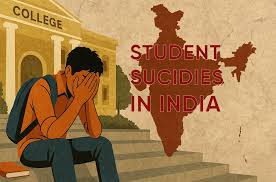
The Silent Epidemic: Unravelling the Crisis of Student Suicides in India
The Silent Epidemic: Unravelling the Crisis of Student Suicides in India
The recent and heartbreaking death of 16-year-old Shourya Patil in Delhi has once again pierced the collective conscience of the nation, serving as a grim reminder of a crisis that has been simmering beneath the surface of India’s education system for years. This tragic incident is not an isolated anomaly; rather, it is a devastating symptom of a systemic failure to protect the mental and emotional integrity of the country’s youngest citizens. As news cycles move on, the underlying issues like unchecked bullying, relentless academic pressure, and profound institutional neglect, remain largely unaddressed, leaving millions of students vulnerable. The narrative has shifted from being a collection of individual tragedies to a clear signal of structural collapse in child protection mechanisms.
The data supports this alarming narrative with irrefutable clarity. According to the latest statistics from the National Crime Records Bureau (NCRB), student suicides in India have surged by a staggering 65% over the last decade. This is not merely a statistical fluctuation; it is a humanitarian crisis. The sheer volume of these tragedies points to a severe gap in institutional mental health protection, suggesting that schools, families, and policymakers are struggling to keep pace with the evolving and intensifying psychological needs of the younger generation. To understand the magnitude of this issue, we must look beyond the headlines and dismantle the structural flaws that drive students to the edge.
The Statistical Reality: A Decade of Decline
The numbers paint a harrowing picture of the state of adolescent mental health in India. Between 2013 and 2023, the number of student suicides rose from 8,423 to 13,892. This 65% escalation significantly outpaces the national average for suicide growth across other demographics, indicating that students have become a uniquely vulnerable group within the population. What is perhaps most disturbing is the shifting demographic of the victims. While academic stress was previously associated largely with older teenagers appearing for board exams or competitive entrance tests, the age bracket has now widened alarmingly to include children as young as 9 to 17 years old.
This downward shift in age suggests that stress is no longer limited to high-stakes career turning points; it has become pervasive across all stages of schooling, infiltrating primary and middle school years. The pressure is starting earlier, and the coping mechanisms are failing faster. Furthermore, geographical and temporal data reveal specific "clusters" of tragedy. States with high concentrations of coaching centers and intense competitive academic cultures, such as Telangana and Uttar Pradesh, report significant spikes in suicide cases that coincide specifically with examination months. This temporal correlation provides undeniable evidence that the current assessment-driven culture, where a student's worth is tied to a test score, which is a primary trigger for fatal distress.
The Post-Pandemic Behavioral Shift
While academic pressure is a historical constant in the Indian education landscape, the post-pandemic era has introduced new, complex variables that have exacerbated the crisis. Mental health professionals and educators have observed a marked decline in emotional resilience among adolescents following the global lockdowns. The prolonged isolation experienced during critical developmental years has led to increased social withdrawal and a distinct lack of "soft skills" necessary to navigate peer relationships, conflict, and failure.
Compounding this fragility is the issue of digital overstimulation. The "new normal" for Indian adolescents involves significantly higher screen time, where the dopamine loops of social media constantly engage the developing brain. This digital immersion often distorts self-image through unrealistic comparisons and heightens impulsivity. When a student who is already struggling with low emotional resilience encounters academic failure or peer rejection, the lack of real-world support systems combined with the presence of digital echo chambers can create a fertile ground for self-harm tendencies. The virtual world offers an escape, but it often amplifies the feelings of inadequacy that lead to despair, creating a vicious cycle of anxiety and isolation.
Institutional Failures: Laws Without Enforcement
India does not suffer from a lack of legal frameworks intended to protect children; it suffers from a chronic and lethal failure of implementation. The Supreme Court of India, in its 2025 guidelines, explicitly directed educational institutions to establish dedicated helplines, appoint mandatory counselors, and conduct staff sensitization programs. Similarly, the Juvenile Justice (JJ) Act and the Protection of Children from Sexual Offences (POCSO) norms legally mandate the creation of school-level child protection committees to handle grievances and conduct safety audits.
However, the reality on the ground is starkly different and deeply concerning. UNICEF’s 2024 report highlights a critical gap between policy intent and practical application. While approximately 23% of schoolchildren in India exhibit some form of psychiatric symptoms, the ratio of trained counselors to students remains critically low. Most schools continue to view mental health infrastructure as a luxury or a bureaucratic checkbox rather than a vital necessity. There is a profound resource deficit, with the majority of educational institutions lacking specific budgets for mental well-being, safe spaces for confidential disclosure, or evidence-based emotional literacy programs. The laws exist on paper, but for a student in distress, the support system is virtually non-existent.
The Toxic Ecosystem: Punitive Culture and Bullying
The environment within school walls often acts as a catalyst for distress rather than a buffer against it. A punitive classroom culture remains the norm in many parts of the country. In this system, dignity is frequently eroded by rigid academic expectations and authoritarian discipline. Students are subjected to public shaming for poor grades, and their worth is determined solely by comparison-based ranking systems. This commodification of students, where they are valued only for their academic output & strips them of their sense of belonging and self-worth, making them feel expendable.
Parallel to this is the normalization of bullying. Verbal taunts, exclusion, cyber-bullying, and physical teasing are frequently dismissed by school authorities as "kids being kids" or trivialized as a rite of passage. However, for the victim, these are severe adverse childhood experiences that can lead to long-term trauma and immediate despair. The failure to address bullying effectively is partly due to deficits in teacher training. Current B.Ed programs rarely include robust modules on mental health or conflict resolution. As a result, teachers often lack the tools for empathetic communication or psychological first aid, leaving them ill-equipped to spot a struggling child or intervene effectively in peer conflicts before they escalate.
The Domestic Vacuum and Systemic Blind Spots
The crisis is not confined to the classroom; it spills over into the home, creating a 24-hour cycle of pressure. Changing family dynamics, characterized by the rise of nuclear families and high work pressures for parents, have created an unintentional emotional vacuum in many households. The reduced parental engagement means that children often internalize their distress in silence, lacking a safe harbor at home to voice their fears. When this isolation interacts with the "digital overstimulation" mentioned earlier, the risk factors multiply exponentially.
Furthermore, there are systemic blind spots that prevent early intervention. Warning signs such as sudden academic decline, drastic mood swings, irritability, or social withdrawal are often dismissed by both parents and teachers as "normal teenage behavior" or "acting out." This dismissal is often fatal. Added to this is the medical gap; even when a problem is identified, there is limited access to age-appropriate psychiatric services in India. This leads to a scenario where trauma, anxiety, and depression are left untreated until they reach a crisis point. Despite judicial interventions, the regulatory enforcement regarding mental health infrastructure remains inadequate, allowing these blind spots to persist unchecked.
A Blueprint for Reform: Infrastructure and Academic Overhaul
To reverse this tragic trend, a piecemeal approach will not suffice; the solution requires a radical structural transformation. India requires a comprehensive infrastructure overhaul in its schools. It must be mandatory for every school with over 100 students to appoint full-time, qualified counselors and establish confidential crisis-intervention teams. These teams must be supported by the integration of dedicated helplines with mandatory follow-up protocols for high-risk cases, ensuring that no cry for help goes unanswered or lost in bureaucracy.
Simultaneously, there must be a fundamental reform in academic culture. The education system needs to pivot from high-stakes, "do-or-die" examinations to holistic evaluation methods. This includes adopting project-based learning and phased assessments that test understanding rather than rote memory and speed. Pressure management strategies are essential immediate steps: this includes strictly regulating the intense coaching center industry, limiting homework loads to ensure work-life balance for children, and introducing "buffer days" around exam schedules to allow for mental decompression.
Conclusion: From Reaction to Prevention
The rising trajectory of student suicides in India is a clear indicator of a system that overwhelms its children instead of nurturing them. The loss of lives like that of Shourya Patil should not merely provoke temporary outrage; it should provoke permanent structural change. The solution lies in a multi-stakeholder approach that involves capacity building for teachers, emotional literacy curriculums for students, and active partnership with parents.
We must move towards integrating Social and Emotional Learning (SEL) into the core curriculum, teaching empathy, conflict resolution, and stress management with the same rigor as mathematics or science. Ultimately, preventing the next tragedy requires transforming schools from pressure cookers into safe, empathetic spaces where a child’s emotional well-being is valued as highly as their academic success. India must move from reactive grief to proactive structural reform before more young lives are lost to a preventable epidemic.