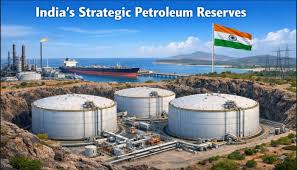
The Strategic Imperative of India’s Petroleum Reserves: Safeguarding Energy Sovereignty
The Strategic Imperative of India’s Petroleum Reserves: Safeguarding Energy Sovereignty
The global energy landscape in 2026 remains a volatile theater of geopolitical tensions and supply chain disruptions. For a rapidly developing nation like India, energy is the lifeblood of economic growth and industrial modernization. In a critical update provided to the Rajya Sabha, the Ministry of Petroleum and Natural Gas revealed that India’s Strategic Petroleum Reserves (SPRs) are currently operating at 64% of their existing capacity. This disclosure serves as a high-level briefing on the nation's preparedness against external shocks. As the world grapples with the fallout of the West Asia crisis and fluctuating crude prices, the maintenance and expansion of these "national insurance policies" have become a top-tier priority for the Union Government.
The Genesis and Concept of Strategic Stockpiling
A Strategic Petroleum Reserve is essentially a massive, state-owned stockpile of crude oil intended to provide a buffer against unforeseen disruptions in the global oil market. The concept gained worldwide momentum following the 1973 oil crisis, which exposed the vulnerability of oil-importing nations to the whims of producing cartels. In the Indian context, the Indian Strategic Petroleum Reserve Limited (ISPRL) was established in 2004 as a Special Purpose Vehicle (SPV) under the Oil Industry Development Board (OIDB). The primary mission of ISPRL is to manage these underground caverns and ensure that the nation is never paralyzed by a sudden cutoff in supply. This initiative aligns with India’s status as an Associate Member of the International Energy Agency (IEA), which suggests that member countries maintain emergency reserves equivalent to at least 90 days of their net oil imports.
The Architecture of Underground Rock Caverns
One of the most fascinating aspects of India's SPR program is the choice of storage technology. Unlike traditional systems that utilize massive steel tanks above ground, India uses specialized underground rock caverns. These are giant man-made caves carved into solid geological formations, hundreds of feet below the surface. This method is preferred for several strategic reasons. Firstly, underground storage is significantly safer from external threats, such as aerial bombardment, sabotage, or natural disasters like cyclones. Secondly, the constant underground temperature prevents the evaporation of volatile components of the crude. Finally, it is far more cost-effective over the long term, as rock caverns require minimal maintenance compared to the constant corrosion checks needed for above-ground steel infrastructure.
Engineering Excellence: Hydrostatic Containment and Integration
The technical sophistication of these reserves lies in the principle of hydrostatic containment. The rock caverns are unlined, meaning the oil is in direct contact with the rock. To prevent the oil from leaking, the caverns are situated at a depth where the pressure of the surrounding groundwater is higher than the pressure of the stored oil. This natural water pressure keeps the oil "trapped" within the rock walls, ensuring zero leakage. Furthermore, these reserves are strategically integrated with India's coastal infrastructure. By locating them near major ports and existing refineries in Visakhapatnam, Mangaluru, and Padur, the government ensures that during a crisis, the stored crude can be mobilized through pipelines with minimal delay, keeping the national fuel supply chain moving.
Current Infrastructure: Phase-I and the Expansion Roadmap
India's SPR strategy is executed through a phased approach. Phase-I is currently operational and comprises three major locations. The Visakhapatnam facility in Andhra Pradesh has a capacity of 1.33 Million Metric Tonnes (MMT), while the Karnataka coast hosts two more facilities: Mangaluru (1.50 MMT) and Padur (2.50 MMT). Together, these provide a cushion of roughly 9.5 days of India’s crude requirements. However, recognizing that this is insufficient for a prolonged global conflict, the government is aggressively pushing for Phase-II. This expansion includes a massive 4 MMT facility at Chandikhol in Odisha and an additional 2.5 MMT at Padur. Once Phase-II is fully commissioned, India's total strategic storage capacity will increase significantly, moving closer to providing a much larger safety net for the economy.
The Strategic-cum-Commercial Management Model
Maintaining millions of tonnes of oil is an expensive endeavor for the national exchequer. To mitigate these costs, India has pioneered a strategic-cum-commercial model. Under this arrangement, the government allows foreign National Oil Companies, such as the Abu Dhabi National Oil Company (ADNOC) from the UAE, to lease a portion of the storage space. These foreign partners can store their oil in India and trade it under normal circumstances. However, the agreement is structured such that in a national emergency, the Indian government retains the "first right of refusal" to use that oil. This innovative model reduces the storage burden on the Indian taxpayer while ensuring that the physical molecules of oil remain within Indian territory, ready for immediate domestic use if global supply lines are severed.
Economic and Geopolitical Significance of Oil Buffers
The significance of a robust SPR cannot be overstated for a nation that imports over 88% of its crude oil. When global oil prices spike due to geopolitical volatility, the domestic economy faces the threat of "cost-push" inflation. By releasing oil from the strategic reserves, the government can temper the rise in petrol and diesel prices at the pump, thereby protecting the logistics, agriculture, and manufacturing sectors from sudden cost escalations. Beyond domestic economics, these reserves provide vital geopolitical leverage. A nation with a month of oil in the bank can negotiate from a position of strength during international crises, ensuring that India’s foreign policy remains autonomous and driven by national interest rather than energy desperation.
Conclusion: Fueling the $5 Trillion Dream
As India marches toward its goal of becoming a $5 trillion economy, energy security stands as the bedrock of its national security architecture. The current 64% occupancy of the reserves in 2026 is a reminder that the task of filling our "national tanks" is an ongoing priority. The rapid completion of Phase-II and the continued exploration of dynamic inventory management buying oil when prices are low will be essential. In an era where energy is often used as a tool of statecraft, the Strategic Petroleum Reserves ensure that India’s economic engine remains resilient. By shielding the common citizen from global price shocks, the SPR program acts as a silent sentinel guarding the nation's future prosperity.