Transforming a Waste-Ridden Urban India: From Linear Disposal to a Circular Economy
Transforming a Waste-Ridden Urban India: From Linear Disposal to a Circular Economy
The landscape of urban waste management has undergone a paradigm shift following the COP30 summit (Belém, 2025), where waste and circularity were positioned at the core of global climate action. International commitments were established to drastically reduce methane emissions through focused initiatives like No Organic Waste (NOW). For India, this represents a critical transition from the traditional, linear "collect-and-dump" model toward a sophisticated circular economy framework. In this model, waste is no longer viewed as a liability to be hidden in landfills but as a valuable resource to be minimized, segregated, and reused to mitigate the health risks inherent in rapidly expanding urban centers.
The Mounting Challenge of Urban Waste Generation
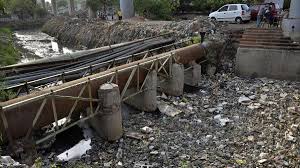
As India continues its trajectory of rapid urbanization, the scale of waste generation is reaching unprecedented levels. Projections indicate that urban India will generate approximately 165 million tonnes of municipal solid waste annually by 2030. Looking further ahead to 2050, as the urban population approaches 814 million, this figure could skyrocket to 436 million tonnes. Beyond the sheer volume, the climate implications are severe; urban waste currently emits over 41 million tonnes of greenhouse gases, primarily in the form of methane. Additionally, cities grapple with roughly 12 million tonnes of construction and demolition (C&D) waste annually, a primary contributor to particulate matter pollution.
Organic Waste: Unlocking Economic and Environmental Value
Organic or "wet" waste presents a unique opportunity for India to close the soil-nutrient loop through large-scale composting. Under the Market Development Assistance (MDA) scheme of 2025, a subsidy of ₹1,500 per tonne has enabled cities like Varanasi to supply fermented organic manure to regional farmers, effectively turning urban waste into agricultural wealth. Furthermore, the process of bio-methanation allows for the production of Compressed Biogas (CBG), linking waste management directly to clean energy. By 2025, the GOBARdhan initiative facilitated approximately 750 CBG projects, with Indore’s 550 TPD plant serving as a national benchmark by fueling city buses with waste-derived gas.
Decisive Interventions under Swachh Bharat Mission (Urban) 2.0
The Swachh Bharat Mission-Urban (SBM-U) 2.0 has institutionalized scientific waste processing through its Garbage Free Cities (GFC) star-rating framework. In the 2025 Swachh Survekshan rankings, cities like Navi Mumbai and Surat achieved 7-Star GFC status by demonstrating 100% waste processing and total clearance of legacy waste. A key pillar of this success is dump-site remediation through bio-mining, which reclaims valuable urban land by segregating legacy waste into soil enrichers and recyclables. For instance, in August 2025, the Municipal Corporation of Delhi (MCD) reported a massive bio-mining operation of 25,000 MT per day across major landfills.
Decentralization and Social Integration
Modern waste management is moving toward on-site and decentralized solutions to eliminate the emissions and costs associated with long-distance transportation. Under SBM-U 2.0’s 2025 norms, hotels and institutions in regions like Srinagar achieved 100% in-situ food waste processing. Beyond technology, these systems are generating green livelihoods by formalizing informal labor. The SafaiMitra Suraksha Programme (2025) has integrated Self-Help Groups (SHGs) into formal composting and Material Recovery Facility (MRF) operations, providing dignity and economic stability to waste workers.
Technological Integration: Smart Waste Management
A critical addition to the 2025 framework is the use of Internet of Things (IoT) and Artificial Intelligence (AI) in urban logistics. Cities are now deploying GPS-enabled waste collection vehicles and AI-based sorting at MRFs to improve the purity of recyclables. Digital platforms like the Swachhata App have evolved to include real-time tracking of waste-to-wealth transitions, allowing citizens to see the tangible impact of their segregation efforts. This technological push is essential to overcome the Source Segregation Push, which remains the most significant behavioral hurdle.
Identifying the Structural Bottlenecks
Despite progress, the transition is hampered by persistent challenges. Poor source segregation remains a major hurdle; mixed waste contaminates recyclables and undermines the viability of waste-to-energy plants. In 2025, the Supreme Court highlighted that several NCR cities had segregation rates below 20%, leading to widespread failures in processing machinery. Furthermore, municipal capacity constraints in Tier-3 cities often result in a shortage of skilled staff needed to maintain complex bio-methanation units. There are also market-side issues where poor-quality compost leads to a lack of trust among farmers.
Scaling Responsibility: Plastic and C&D Waste
The complexity of plastic waste, particularly multi-layered plastics, continues to cause environmental leakage despite Extended Producer Responsibility (EPR) norms. Data from the 2025 CPCB EPR Portal revealed shortages of food-grade recycled resins, even amidst mandatory recycled-content rules. Similarly, gaps in Construction and Demolition (C&D) waste enforcement lead to illegal dumping that clogs urban drainage. A 2025 audit found that over 70% of Urban Local Bodies (ULBs) still lack designated collection points for such debris.
The Path Forward: Innovation and Global Best Practices
To overcome these barriers, India is looking toward global models like Sweden’s waste-to-energy systems and Japan’s community-led segregation. Effective implementation of the Environment (C&D) Waste Management Rules, 2025, set to take effect in April 2026, will be a game-changer for accountability. Expanding the EPR framework to include textiles and e-waste will shift the financial burden back to producers. On the citizen level, linking waste segregation to user-fee rebates or carbon credits can transform residents into active stakeholders in the circular economy.
Conclusion: A Sustainable Urban Future
The urban waste crisis in India is no longer an aesthetic issue but a profound climate, health, and economic challenge. By embedding circularity, decentralized processing, and active citizen participation into the core of urban governance, India can transform its waste streams into engines of sustainable growth. The success of these initiatives will determine whether India's rapidly growing cities emerge as resilient, sustainable hubs or remain burdened by the legacy of waste.