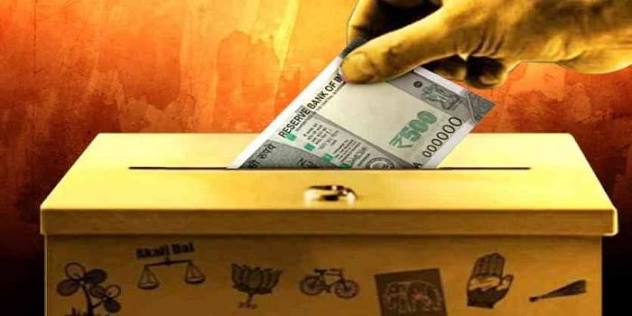
Electoral Black Money in India
Electoral Black Money in India
Elections are the foundation of representative democracy, but their credibility depends not merely on the right to vote but also on the freedom with which that right is exercised. The growing influence of unaccounted money in elections poses a serious challenge to this principle. Cash distribution, inducements, undisclosed political contributions and excessive campaign expenditure can influence voters, distort electoral competition and create channels through which private interests gain disproportionate influence over public policy. In the State of Karnataka & Anr. v. Prathik Parasrampuria (2026 INSC 868), the Supreme Court underlined that controlling unaccounted wealth and financial inducements is an important responsibility of the Election Commission of India. The Court also connected clean elections with the constitutional principle of free and fair elections, which forms part of the basic structure of the Constitution.
Money Power and the Autonomy of the Voter
The fundamental danger posed by electoral black money is that it can transform the voter from an autonomous participant into a target of financial influence. Distribution of cash, liquor, consumer goods or other benefits before elections can create immediate material incentives that interfere with independent political choice. Such practices are particularly problematic in constituencies where economic vulnerability is high. The constitutional guarantee of adult suffrage under Article 326 assumes that citizens will be able to exercise their vote freely and without coercion or undue inducement.
Black money also creates an unequal electoral environment. Candidates with access to large pools of undisclosed funds can potentially reach voters more aggressively, organise extensive campaigns and deploy networks that candidates dependent on transparent resources cannot easily match. The result is not simply an accounting problem; it can affect political equality and the quality of representation. Furthermore, illicit campaign financing may generate expectations of reciprocal benefits after an election. When political financing becomes dependent on undisclosed private interests, public decisions relating to contracts, licences, land, regulation or procurement may become vulnerable to undue influence.
Supreme Court Intervention and Stronger Electoral Oversight
The Supreme Court's 2026 directions seek to address an important weakness in the enforcement system: the gap between the seizure of suspected illicit election funds and the eventual conclusion of criminal or tax proceedings. The Court directed that seized cash or other assets should be reported to the competent magistrate or court within 24 hours, together with written reasons demonstrating a prima facie connection with a suspected electoral offence. Such safeguards seek to combine effective enforcement with procedural accountability.
Another significant direction concerns investigation timelines. Election-related First Information Report investigations are expected to be completed within one year so that cases do not remain unresolved across successive elections. This is important because delayed investigation can weaken deterrence and reduce public confidence in electoral enforcement. The Court also emphasised coordination between election authorities and tax authorities. Where Static Surveillance Teams or Flying Squads detect unaccounted cash exceeding ₹10 lakh, the matter is to be communicated to the Income Tax Department for examination from the perspective of possible tax evasion.
The judicial approach also gives importance to timely adjudication. High Courts have been directed to designate specialised courts for election-related financial offences so that such cases can be concluded within the relevant five-year electoral cycle. In addition, state governments cannot simply withdraw criminal cases connected with an election cycle without obtaining prior permission from the concerned High Court. Together, these measures attempt to ensure that electoral offences do not become ineffective merely because investigations and trials continue for years.
Constitutional and Legal Architecture
India already possesses a substantial legal framework for regulating election expenditure. Article 324 of the Constitution provides the Election Commission with broad responsibility for the superintendence, direction and control of elections. This constitutional authority gives the Commission an important institutional role in preventing practices that undermine electoral fairness.
The Representation of the People Act, 1951 also regulates candidate expenditure. Section 77 requires candidates to maintain proper accounts of election expenditure, while Section 78 requires these accounts to be submitted to the designated election authority within the prescribed period. The Conduct of Elections Rules, 1961 further prescribe expenditure ceilings for candidates contesting parliamentary and legislative assembly elections.
Tax law provides another layer of financial regulation. Section 13A of the Income Tax Act, 1961 provides tax benefits to eligible political parties subject to specified conditions relating to contributions, record-keeping and auditing. Restrictions on cash contributions and disclosure requirements are intended to make political finance more traceable. However, the effectiveness of these provisions depends heavily on accurate reporting, independent auditing and meaningful enforcement.
Structural Gaps in the Existing System
Despite the legal framework, several structural weaknesses continue to provide opportunities for the circulation of unaccounted electoral money. One major concern is the distinction between candidate expenditure and political-party expenditure. Candidate spending is subject to statutory limits, but expenditure undertaken independently by political parties or prominent campaigners may not always be captured within the same framework. This creates the possibility that the overall financial scale of an election campaign can substantially exceed what is reflected in an individual candidate's expenditure account.
Another challenge is the fragmentation of political contributions. Instead of reporting large contributions transparently, funds may potentially be divided into smaller amounts to avoid disclosure thresholds. Such practices make it difficult for regulators and citizens to identify the actual sources of political finance.
The digital transformation of election campaigning has created a newer challenge. Traditional surveillance mechanisms are designed largely around physical cash, campaign vehicles, public meetings and visible political activity. Modern campaigns increasingly use targeted online advertising, social-media influencers, digital communication networks and data-driven outreach. Unaccounted expenditure can therefore be concealed within complex digital transactions and third-party promotional arrangements, making monitoring more difficult.
There is also a broader institutional issue. The Election Commission has significant constitutional authority, but its statutory powers relating to political-party financial violations remain limited in certain respects. Effective regulation therefore requires not only stronger monitoring but also clearer legislative authority and enforceable consequences.
Reform Committees and the Search for Electoral Transparency
India's concerns regarding money power in politics are not new. Several committees and expert bodies have examined the problem and proposed reforms. The Dinesh Goswami Committee emphasised the need for stronger regulation of election expenditure and more efficient resolution of electoral disputes. The Vohra Committee highlighted the dangerous relationship between organised criminal networks, political actors and elements of the administrative system, demonstrating how illicit financial resources can reinforce the criminalisation of politics.
The Indrajit Gupta Committee examined the possibility of state support for elections and recommended partial state funding, particularly through non-cash assistance such as broadcasting facilities and other campaign-related support. Such an approach sought to reduce candidates' dependence on private financial resources while maintaining accountability.
The Law Commission, through its reports on electoral reforms, has also proposed measures concerning political-party finances, internal democracy, campaign expenditure and disclosure of political donations. These recommendations collectively demonstrate that electoral black money cannot be eliminated through seizures alone. It requires a comprehensive architecture covering political parties, candidates, donors, campaign platforms and enforcement agencies.
Way Forward: From Seizures to Systemic Reform
India's response to electoral black money must move from reactive enforcement towards preventive transparency. First, the law should establish a clearer framework for regulating aggregate political-party expenditure during elections. A campaign cannot be considered financially transparent if only the candidate's expenditure is regulated while substantial party-level spending remains outside effective scrutiny.
Second, political-party accounts should be brought under stronger and more uniform disclosure standards. Donations above specified thresholds should preferably move through traceable banking or digital channels, making the identity and flow of funds easier to verify. Independent and timely auditing should accompany disclosure so that transparency is not reduced to a formal reporting exercise.
Third, election authorities require stronger institutional capacity. Surveillance teams, tax authorities, financial-intelligence agencies and enforcement bodies should operate through coordinated information-sharing mechanisms. Digital campaign expenditure should also be brought within a transparent reporting framework, including expenditure undertaken through third-party advertising agencies and online platforms.
Finally, the Supreme Court's emphasis on time-bound investigation and specialised adjudication should be translated into effective institutional practice. Election-related financial offences lose much of their deterrent value when cases remain unresolved for several years. Swift investigation, prosecution and judicial determination are therefore essential.
Conclusion
Electoral black money is ultimately a threat to the quality of democracy rather than merely a violation of financial rules. When money determines access to voters, influences political competition or creates hidden obligations between donors and elected representatives, the principle of political equality is weakened. India's constitutional framework already provides important safeguards, but the changing nature of campaign finance demands continuous reform.
The Supreme Court's intervention in Prathik Parasrampuria reinforces the need for accountability, speed and coordination in dealing with electoral financial offences. However, lasting reform requires legislative action to regulate party expenditure, strengthen disclosure mechanisms, improve digital financial monitoring and empower electoral institutions. A genuinely free election is not simply one in which citizens are allowed to vote; it is one in which their political choices are protected from concealed financial influence. Ensuring that condition is essential for preserving public trust and the democratic character of the Indian Republic.
#RACEIAS #UPSC #CivilServices #IASPreparation #UPSCPreparation #CurrentAffairs #UPSCNotes #GSPreparation #Prelims2027 #Mains2027 #BestIASCoaching #BestCivilServicesCoaching #BestIASCoachingLucknow #BestCivilServicesCoachingLucknow #IASCoachingLucknow #UPSCCoachingLucknow #LucknowIAS #KanpurIAS #KapoorthalaLucknow #IndiraNagarLucknow #AlambaghLucknow #IASCoachingKanpur #UPSCCoachingKanpur #BestIASInstitute #BestUPSCCoaching #RACEIASLucknow #RACEIASKanpur #CivilServicesExam #GovernmentJobs #UPSCAspirants