Financial Inclusion in India: From Access to Empowerment
From Access to Empowerment: The Evolution of Financial Inclusion in India
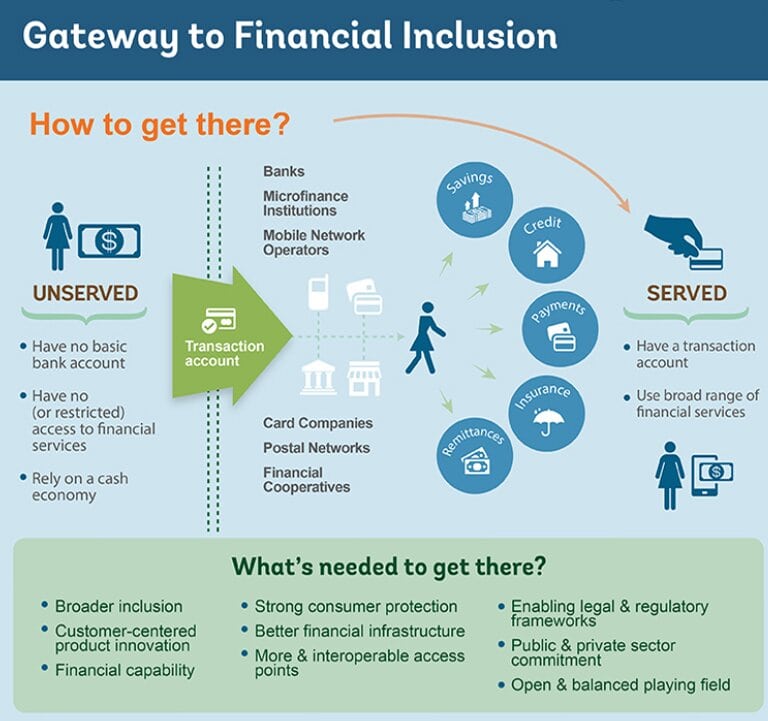
For decades, financial exclusion remained one of the major structural barriers to equitable economic development in India. Millions of low-income households, small farmers, informal workers, and rural communities remained outside the formal financial system. They depended heavily on cash-based savings, local moneylenders, and informal credit networks, often at high costs. Such exclusion restricted their ability to save securely, access affordable credit, obtain insurance, and build financial resilience. Over the past decade, however, India has witnessed a major transformation in this area. Financial inclusion has gradually evolved from the narrow objective of opening bank accounts to a broader approach encompassing digital payments, insurance, pension coverage, affordable credit, and financial literacy. Today, financial inclusion is not merely a welfare-oriented intervention but an important instrument for inclusive economic growth, social security, and last-mile empowerment.
Measuring India’s Financial Transformation
The progress of financial inclusion in India can be assessed through several important indicators. The Reserve Bank of India’s Financial Inclusion Index, which measures improvements in access, usage, and quality of financial services, increased from 43.4 in March 2017 to 70.0 in March 2026. This reflects a substantial expansion of financial services across the country. Similarly, the World Bank’s Global Findex indicates that the proportion of Indian adults with bank accounts increased from just 35 percent in 2011 to 89 percent.
This transformation has been supported by a large physical and human infrastructure. India now has approximately 1.81 lakh bank branches and 1.65 lakh post offices. More than 17.36 lakh Banking Correspondents have extended banking services to the grassroots. Consequently, 99.92 percent of Indian villages now have access to a formal banking touchpoint within a five-kilometre radius. India Post Payments Bank has further expanded this reach, serving more than 11 crore customers across over 5.57 lakh villages and towns.
PM Jan-Dhan Yojana and the JAM Trinity
The Pradhan Mantri Jan-Dhan Yojana has been one of the central pillars of India’s financial inclusion strategy. Its primary objective was to provide every unbanked adult with access to a basic bank account. The scheme has brought more than 58.90 crore beneficiaries into the formal banking system, including 32.83 crore women. PMJDY accounts provide more than simple deposit facilities; they are linked with RuPay debit cards, accident insurance, and overdraft facilities of up to ₹10,000.
The impact of universal banking was strengthened by the JAM Trinity—Jan Dhan, Aadhaar, and Mobile. The integration of these three platforms created a powerful digital bridge between citizens and the state. Bank accounts linked with Aadhaar and mobile numbers enabled Direct Benefit Transfers, allowing subsidies, welfare payments, and relief assistance to reach beneficiaries more directly. This helped reduce leakages, administrative delays, and dependence on intermediaries. The JAM architecture therefore transformed bank accounts from passive savings instruments into an important channel for delivering government services and welfare benefits.
Social Security Through Insurance and Pension
Bank account ownership alone cannot provide complete financial security. Poor and vulnerable households remain exposed to economic shocks arising from accidents, death of an earning member, disability, or old age. Recognizing this limitation, India has expanded financial inclusion to include affordable insurance and pension products.
The Pradhan Mantri Jeevan Jyoti Bima Yojana provides ₹2 lakh of life insurance coverage to individuals aged 18–50 years for an annual premium of ₹436. Similarly, the Pradhan Mantri Suraksha Bima Yojana provides ₹2 lakh of accidental death and disability coverage to individuals aged 18–70 years for an annual premium of only ₹20. These low-cost insurance schemes are particularly important for low-income households because even a small financial shock can push vulnerable families into debt or poverty.
For long-term financial security, the Atal Pension Yojana focuses particularly on workers in the unorganized sector. Domestic workers, agricultural labourers, daily-wage workers, and other informal workers can contribute during their working years and receive a guaranteed monthly pension ranging from ₹1,000 to ₹5,000 after reaching the age of 60. Such measures extend financial inclusion beyond banking access and create a broader social-security framework for vulnerable sections of society.
Democratizing Credit and Promoting Entrepreneurship
Access to affordable formal credit is another essential component of financial inclusion. Historically, small entrepreneurs, street vendors, farmers, and informal workers often depended on moneylenders because they lacked collateral or formal credit histories. Government initiatives have attempted to bridge this gap by providing targeted and affordable credit.
The PM MUDRA Yojana provides collateral-free micro-loans to non-corporate and non-farm small businesses. Its four categories correspond to different stages of enterprise development. Shishu provides loans up to ₹50,000, Kishor covers loans from ₹50,000 to ₹5 lakh, Tarun provides loans from ₹5 lakh to ₹10 lakh, while Tarun Plus extends credit up to ₹20 lakh for eligible businesses seeking further expansion.
Other initiatives address specific sections of the economy. PM SVANidhi provides working-capital loans to street vendors in progressive tranches of ₹15,000, ₹25,000, and ₹50,000. Timely repayment can provide additional benefits such as interest subsidies and digital cashback. In rural areas, the Kisan Credit Card provides affordable credit to farmers, pastoralists, and fishermen for cultivation and related activities. The Jan Samarth Portal further seeks to simplify access by connecting 16 government credit schemes, eight loan categories, and more than 300 lenders through a single digital platform.
Digital Public Infrastructure and the UPI Revolution
India’s financial inclusion story has been significantly transformed by Digital Public Infrastructure, particularly the Unified Payments Interface. UPI has enabled citizens to make real-time digital payments through a common platform and has extended digital transactions beyond large businesses and urban consumers to street vendors, small merchants, and rural businesses.
The scale of UPI’s growth has been extraordinary. Between FY 2016–17 and FY 2025–26, UPI transaction volume increased approximately 12,000-fold, while transaction value increased nearly 4,000-fold. This demonstrates how rapidly digital payments have become integrated into everyday economic activity.
However, infrastructure alone cannot guarantee meaningful financial inclusion. Users must also possess the knowledge and confidence required to use financial services safely. The National Centre for Financial Education has therefore promoted financial literacy under the National Strategy for Financial Education framework. The Financial Education Programme for Adults targets groups such as farmers, women’s Self-Help Groups, ASHA and Anganwadi workers, and vocational trainees. Large-scale campaigns have also covered more than 2.70 lakh Gram Panchayats and Urban Local Bodies, promoting account activation, insurance enrolment, and pension registration.
Challenges and the Way Forward
Despite remarkable progress, India’s financial inclusion journey still faces several structural challenges. Opening a bank account does not necessarily guarantee its active usage. Some rural accounts remain underutilized or dormant because of irregular incomes and continued dependence on cash transactions. Digital and financial literacy also remains uneven, particularly in remote areas. Limited familiarity with interest rates, credit discipline, digital banking interfaces, and financial products can discourage first-time users from participating actively in the formal financial system.
The rapid expansion of digital finance has also created new cybersecurity risks. Phishing, identity theft, online fraud, and unauthorized digital lending platforms can disproportionately affect financially inexperienced users. At the same time, formal credit and insurance have not yet reached every vulnerable household effectively, leaving some families dependent on costly informal lenders during emergencies.
The next stage of financial inclusion must therefore move from mere access towards genuine financial well-being. Financial products should be designed around the irregular income patterns of rural and informal workers. Flexible micro-insurance, micro-pension products, and small-ticket credit facilities can strengthen household resilience. Financial literacy initiatives should become more localized and multilingual, while stronger consumer-protection and fraud-redressal mechanisms are needed to build trust in digital finance. Artificial Intelligence and voice-based banking could further reduce language and literacy barriers by allowing users to access banking services through regional languages and spoken commands.
Conclusion
India’s financial inclusion journey represents a significant shift from financial access to financial empowerment. PM Jan-Dhan Yojana expanded basic banking access, the JAM Trinity strengthened Direct Benefit Transfers, insurance and pension schemes created social-security mechanisms, while MUDRA, PM SVANidhi, and Kisan Credit Card expanded access to formal credit. At the same time, UPI and Digital Public Infrastructure have transformed the way millions of Indians participate in the financial system.
The next challenge is to ensure that access translates into sustained and meaningful participation. Tackling account dormancy, improving financial and digital literacy, strengthening cybersecurity, and expanding last-mile credit and insurance will be essential. The long-term objective should be to build a financial ecosystem in which every citizen can securely save, borrow, insure, invest, and transact. In this transition, India’s financial inclusion strategy can become not only a tool of welfare delivery but also a foundation for economic resilience, social equity, entrepreneurship, and sustainable prosperity. The National Strategy for Financial Inclusion 2025–30 provides an important framework for taking this transformation forward.