Unconditional Women Cash Transfer Programmes in India: Balancing Welfare, Empowerment, and Fiscal Responsibility
Unconditional Women Cash Transfer Programmes in India: Balancing Welfare, Empowerment, and Fiscal Responsibility
The Strategic Shift in India's Welfare Architecture
In recent years, India’s social security strategy has undergone a profound transformation, shifting from indirect commodity subsidies toward direct, unconditional financial empowerment. This paradigm shift is highlighted by a comprehensive working paper released by the Economic Advisory Council to the Prime Minister (EAC-PM). The paper meticulously reviews the socioeconomic impact and long-term fiscal sustainability of Unconditional Women Cash Transfer (UCT) programmes across the country. Historically, welfare delivery faced significant administrative friction, often resulting in leakages and untargeted distribution.
By placing liquid financial resources directly into the hands of female heads of households, modern public policy aims to bypass institutional bottlenecks while respecting individual autonomy. This approach marks a departure from traditional conditional cash transfers that required strict, verifiable compliances like mandatory school attendance or healthcare visits. The EAC-PM working paper serves as a timely institutional assessment, evaluating whether these rapidly expanding fiscal instruments act as genuine engines of human capital development or present challenges to macroeconomic stability.
Expanding the Scale of Direct Benefit Distribution
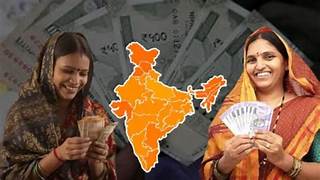
The expansion of women-focused unconditional cash transfers across Indian states represents an unprecedented scaling up of targeted welfare infrastructure. Data from the fiscal landscape reveals that between financial years 2022-23 and 2025-26, the number of sub-national governments executing direct UCT initiatives grew more than five-fold. By the conclusion of FY26, over fifteen state governments had institutionalized these gender-budgeted cash components under various localized titles. This massive institutional rollout brings nearly 12 crore women into the formal safety net, requiring a collective annual budgetary allocation of approximately ₹1.7 lakh crore.
The core operational objectives driving this massive deployment of public capital are threefold:
- Direct Income Support: Providing direct financial assistance to improve overall household welfare and security.
- Financial Inclusion: Integrating marginalized rural and urban women into the formal banking system by encouraging the active utilization of personal bank accounts.
- Economic Equity: Systematically dismantling structural gender-based barriers to credit, thereby reducing historical economic exclusion.
Evaluating the Socioeconomic Dividends of Gender-Targeted Capital
The empirical evidence documented in the EAC-PM working paper underscores the distinct developmental advantages of routing financial resources through women. Field evaluations from diverse states show that cash transfers targeted at women produce superior household savings and welfare outcomes compared to general, gender-neutral resource distribution. For instance, following the introduction of localized cash transfer initiatives, Maharashtra and Odisha recorded substantial increases in baseline consumer expenditure, rising by 46% and 28% respectively.
Importantly, this micro-consumption surge was not directed toward discretionary or luxury goods; instead, the spending was highly quality-focused, flowing into essential categories such as medical care, specialized higher education, and quality-of-life improvements.
[State Cash Transfer Input]
│
▼
[Female Resource Control] ──► Increased Household Bargaining Power
│
├─► 46% Consumption Quality Surge (Maharashtra)
├─► 28% Healthcare/Education Focus (Odisha)
│
▼
[Positive Intergenerational Externalities] (Better Nutrition & Child Schooling)
This distinct consumption pattern highlights what economists call positive intergenerational externalities. Women statistically allocate a significantly higher proportion of marginal income toward child nutrition, school supplies, and preventative family healthcare. Furthermore, securing independent, liquid income directly enhances a woman’s financial autonomy and household bargaining power. This shift in internal family dynamics allows women to exercise greater agency over collective decision-making, financial planning, and asset management.
Navigating Fiscal Constraints and Structural Roadblocks
Despite the clear social dividends, the rapid proliferation of massive cash transfer frameworks presents complex fiscal and structural challenges that demand careful management. A primary concern is the rising level of sub-national public debt. According to macro-fiscal reviews by the Reserve Bank of India (RBI), the cumulative debt-to-GDP ratio for all Indian states combined is projected to hover around 29.2%, with several individual states breaching the critical 30% debt-to-Gross State Domestic Product (GSDP) threshold. When state budgets commit large amounts of untied revenue to recurring cash obligations, they risk crowding out critical capital expenditure.
When liquid cash is disbursed to meet immediate consumption needs, states have less fiscal space to fund long-term physical assets such as transportation networks, clean energy grids, and irrigation facilities or social assets like modern public schools and multi-specialty hospitals. Additionally, poorly targeted or purely competitive political schemes risk fostering dependency loops, which can obscure long-term developmental pathways and draw criticism as short-term populist measures.
Transitioning to a Comprehensive "Cash-Plus" Paradigm
To fully maximize the value of public funds, policymakers are encouraged to move away from isolated cash disbursements and embrace a holistic "Cash-Plus" intervention model. This advanced structural design recognizes that while financial assistance helps alleviate immediate poverty, it must be paired with broader support systems to successfully break generational poverty cycles. The "Cash-Plus" model systematically links regular cash distribution with mandatory or accessible financial literacy training, vocational skill development, and formal healthcare linkages.
By pairing cash with active skill building, states can empower women to transition from passive beneficiaries to active entrepreneurs and skilled workers. Furthermore, policy frameworks must incorporate periodic, index-linked value adjustments. Over time, core inflation can erode the real purchasing power of fixed cash transfers, making regular adjustments and data-driven beneficiary targeting essential to ensure that support reaches the most vulnerable segments of the population.
Optimizing Technological Pipelines and Institutional Integration
The scaling and long-term viability of unconditional cash transfers depend directly on the strength of a nation's digital public infrastructure. In India, the integration of Direct Benefit Transfer (DBT) pathways with the foundational PM Jan Dhan Yojana architecture has provided a highly secure model for fund distribution. By sending welfare components straight into verified bank accounts, governments can eliminate intermediary friction, prevent corruption, and minimize administrative overhead costs.
To ensure these interventions yield lasting benefits rather than serving as temporary relief, UCT frameworks should be integrated as permanent, baseline components of the national social safety net. This transition requires establishing statutory funding mechanisms and transparent institutional rules that decouple vital social protection programs from changing political cycles.
Assessing Global Frameworks for Direct Welfare Distribution
The strategic value of using targeted, direct cash transfers to reduce vulnerability and stimulate human capital development is supported by extensive international and domestic case studies:
|
Program / Initiative |
Geographic Region |
Core Outcomes & Observed Impact |
|
Bolsa Família |
Brazil |
Achieved significant reductions in extreme poverty while driving improvements in children's school enrollment and nutrition tracking. |
|
Progresa / Oportunidades |
Mexico |
Demonstrated measurable, long-term multi-generational gains in rural community health, formal schooling attainment, and regular dietary diversity. |
|
GiveDirectly Initiative |
Kenya |
Confirmed via rigorous independent evaluations that capital placement drives immediate gains in consumption, localized savings, and micro-enterprise investments. |
|
DBT & PM Jan Dhan Yojana |
India |
Established a world-class digital public infrastructure, enabling leak-proof, direct financial inclusion and asset distribution to millions of citizens. |
Structuring Balanced Pathways for Sustainable Empowerment
Unconditional women's cash transfer programmes are highly effective tools for advancing gender equity, improving household nutrition, and fostering financial inclusion across emerging economies. However, their long-term success relies heavily on maintaining rigorous fiscal discipline.
The true challenge for developing economies lies in finding the optimal balance: providing essential, non-negotiable social safety nets while continuing to fund the vital physical infrastructure needed for broader economic growth. By utilizing robust digital public infrastructure, refining beneficiary targeting, and transitioning toward comprehensive "Cash-Plus" frameworks, governments can ensure that public welfare initiatives deliver sustainable, long-term empowerment without compromising macroeconomic stability.