Super El Niño
Super El Niño
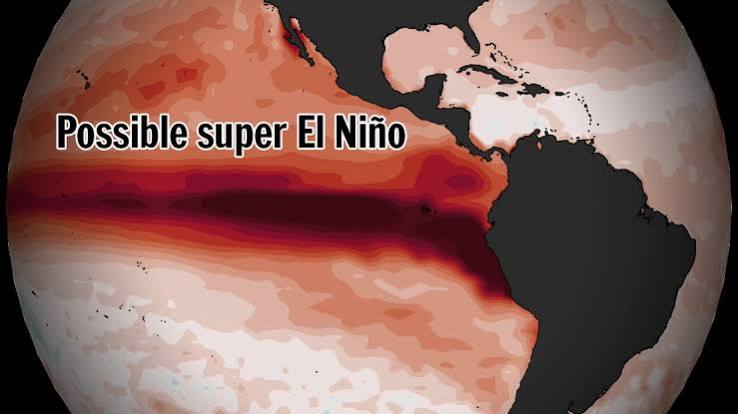
The global climate architecture is undergoing a profound shift as the United States' National Oceanic and Atmospheric Administration (NOAA) confirms the formal establishment of a new El Niño cycle in the equatorial Pacific Ocean. Predictive modeling suggests a 63% probability that this warming phase will escalate into an extreme category, known to meteorologists as a "Super El Niño." While a standard El Niño represents a periodic deviation from baseline oceanic conditions, a Super El Niño is a rare planetary event defined by a massive sea-surface temperature departure exceeding 2°C within the critical Niño 3.4 monitoring region of the Central and Eastern Pacific.
This phenomenon is not merely an isolated oceanographic anomaly; it functions as a powerful driver of global atmospheric circulation, altering weather patterns across multiple continents. Historically, true Super El Niño events are rare. Since systematic instrument tracking began in 1950, the planet has experienced only four such high-intensity episodes: 1972–73, 1982–83, 1997–98, and 2015–16. Each of these occurrences left a legacy of extreme weather, ecological disruption, and multi-billion-dollar economic losses worldwide, highlighting the importance of understanding the mechanics behind the current forecast.
The Dynamic Ocean–Atmosphere Feedback Loop
The formation of a Super El Niño relies on a coupled ocean-atmosphere interaction known as the Bjerknes Feedback Loop. Under normal conditions, robust equatorial trade winds blow persistently from east to west across the Pacific Ocean. This process drives warm surface waters toward maritime Asia and Indonesia, causing cooler, nutrient-rich waters to well up along the South American coast.
During the onset of an El Niño, these trade winds stall, weaken, or completely reverse direction. Deprived of the driving force that maintains the western warm pool, vast volumes of warm surface water begin an eastward migration across the basin toward Peru and Ecuador. As these warm waters accumulate in the eastern Pacific, they alter the atmospheric pressure gradients above them. The reduction in the temperature contrast across the ocean basin further weakens the trade winds. This self-reinforcing cycle locks the climate system into an accelerating warming trajectory that pushes oceanic temperatures past the critical 2°C threshold.
The Climate Change Multiplier and Structural Lifecycles
Modern Super El Niños do not occur in an isolated environment; they operate within an atmosphere and ocean system that has experienced sustained warming over decades. Anthropogenic climate change acts as an environmental incubator, increasing the baseline thermal energy stored within the upper layers of the global ocean. Consequently, when the Bjerknes feedback loop triggers an El Niño, the system starts from a higher baseline temperature, making it easier for the anomaly to cross into the "Super" category.
This phenomenon exhibits a distinct seasonal lifecycle, often described as an S-curve calendar trajectory. The anomalous warming typically begins to manifest during the boreal spring, gradually intensifies through the summer, reaches its peak thermal capacity during the winter months, and undergoes a rapid collapse by the subsequent spring. However, the atmospheric response to this oceanic warming operates with a built-in lag. The most severe global climatic feedback loops often materialize months after the initial oceanic temperature spike, meaning the planetary consequences extend well beyond the calendar limits of the primary warming phase.
Disruptions to Global Cyclonic Redistribution
A common misconception is that a Super El Niño increases the total number of tropical cyclones generated globally. In reality, the phenomenon causes a spatial redistribution of cyclonic activity by altering atmospheric wind shear profiles. Wind shear, the variation in wind speed and direction at different altitudes which acts as a disruptive force that can tear apart the vertical structure of developing storms.
During a Super El Niño, altered atmospheric circulation patterns generate high vertical wind shear across the Atlantic basin. This environment suppresses the development of Atlantic hurricanes, often leading to a quieter storm season in that region. Conversely, the warming of the Central and Eastern Pacific creates highly favorable conditions for cyclonic development by reducing wind shear and maximizing thermal energy at the ocean surface. This shift creates a conducive environment for the formation of high-intensity super typhoons and major hurricanes in the Pacific, reorienting the vulnerability matrix for coastal communities throughout Asia and the Americas.
Implications for the South Asian Monsoon Network
For the Indian subcontinent, the onset of a Super El Niño introduces significant variables into the performance of the South Asian Monsoon. The summer monsoon, which delivers over 70% of India's annual precipitation, is highly sensitive to shifts in Pacific atmospheric pressures. The eastward migration of the Pacific warm pool shifts the rising limb of the Walker Circulation, the large-scale atmospheric loop driving tropical weather away from the Indian Ocean.
This structural shift suppresses the monsoonal wind currents, frequently resulting in below-normal aggregate rainfall, delayed onset timelines, and prolonged dry spells during critical agricultural windows. However, the correlation between El Niño and monsoonal deficits is not entirely linear. The final outcome is often influenced by a secondary climate driver: the Indian Ocean Dipole (IOD). A positive IOD phase characterized by anomalous warming of the western Indian Ocean can act as a countervailing force, mitigating some of the monsoonal suppression caused by El Niño. Nevertheless, current meteorological models suggest that the scale of the projected Super El Niño may overwhelm any offsetting potential from the IOD, highlighting the need for proactive water and agricultural resource management.
Planetary Ecological and Environmental Impacts
Beyond regional monsoonal disruptions, a Super El Niño exerts widespread pressure on global ecosystems. The sudden accumulation of high thermal energy in the upper ocean layers presents an immediate threat to marine biodiversity, particularly coral reef networks. Prolonged exposure to elevated sea-surface temperatures induces severe coral bleaching, a stress response where corals expel their symbiotic algae, leaving them vulnerable to mass mortality.
Simultaneously, the terrestrial impacts are characterized by severe, transnational droughts. Regions such as Southeast Asia, northern Australia, and parts of sub-Saharan Africa experience sharp reductions in precipitation, depleting reservoirs and lowering water tables. These arid conditions transform vulnerable tropical rainforests into highly combustible environments, increasing the frequency and intensity of catastrophic wildfires. The resulting carbon emissions from these fires create a feedback loop that further contributes to global atmospheric warming.
Structural Adaptations and Future Climate Readiness
As the international community confronts the potential for a Super El Niño, developing structural resilience across vulnerable economic sectors becomes a key priority. Managing the risks associated with global climate anomalies requires transitioning from reactive crisis management to proactive risk mitigation.
|
Action Pillar |
Implementation Strategy |
Target Outcome |
|
Water Resource Management |
Optimization of multi-purpose reservoirs and enhanced groundwater recharge infrastructure. |
Preservation of municipal and agricultural water reserves through extended dry periods. |
|
Agricultural Adaptation |
Distribution of drought-tolerant seed varieties and real-time agrometeorological advisory services. |
Protection of crop yields and stabilization of local food supply chains. |
|
Infrastructure Protection |
Upgrading coastal drainage networks and reinforcing energy grids against extreme weather. |
Mitigation of physical damage from super typhoons and localized flash floods. |
Furthermore, the heat released from the Pacific Ocean during a major El Niño can elevate global mean surface temperatures, potentially pushing the planet temporarily above the 1.5°C warming threshold established under international climate frameworks. This underscores the importance of refining early warning systems, enhancing international data-sharing networks, and embedding climate risk parameters directly into long-term infrastructure planning. By strengthening institutional preparedness, societies can better navigate the complex macroeconomic and ecological challenges presented by a Super El Niño.